
Company Spotlight: Elexity
As building-level solar power, batteries, and EV chargers have become more pervasive, the question for many building owners becomes: “Will switching my power supply actually save me money? How will I know I’m using these resources efficiently?” This is where Elexity steps in.
Founded in 2018, Elexity works to balance power generation and energy usage to ensure a streamlined experience for a building’s owner and occupants, and creates a more predictable, manageable landscape for power utilities.
We spoke with Mike Grenier, President of Elexity, and Stu Statman, CTO, about Elexity’s specialized niche, current projects, partnerships, and vision for renewable, reliable—and cheaper—power for all.
Q: What is Elexity’s origin story?
Mike Grenier: Elexity was founded by John Powers, who’s a serial entrepreneur. He was paying attention to some of the big trends that were happening in the energy space, especially around distributed energy, and locked in on this idea that load flexibility was something that the future grid was going to need very desperately. He started looking for technologies that could deliver load flexibility and came up with a concept of using predictive control techniques to manage HVAC and make it solar-smart.
Basically, there’s a mismatch between when a building’s HVAC runs and needs the most power and when the solar produces its greatest output. The central idea behind Elexity was that we could create value both for the building owner and for the grid by getting those to line up in a smarter way. That central concept led to a grant and a proof of concept, and then a prototype, and then some pilot projects.
Q: With that in mind, describe what Elexity does.
MG: For the first time ever, we have technology that allows us to place power resources onsite. We have distributed energy resources at the building: solar on our rooftops, batteries in our parking lots, EVs in our parking lots.
And what’s unique about the landscape today is that a tiny, building-sized “power plant” is cost competitive with a massive plant built to scale. One of the reasons for that is that it’s highly modular and simpler to install. There’s a whole bunch of infrastructure that is required to deliver energy from a wind farm in the Gorge, a solar project in the desert, poles and wires, just to get an electron to our house through a power grid. And that ends up costing money. It turns out if you can just show up and put a panel right on your house, that can be cost-competitive. That’s a pretty big game changer.
The challenge then is that you need a way for the building-sized grid to still be stable and efficient and to operate on the level you need exactly when you need it. You have to find a way of coordinating what’s going on behind the meter [editor’s note: the customer side of the meter] with the grid itself. The grid operator’s job is to balance, from millisecond to millisecond, power generation and load. If those things get out of sync, you have blackouts. That’s bad. So as we add more resources, it gets more challenging for the grid operator to do that balancing act. It’s made even harder by the fact that on the wholesale side, these giant solar and wind plants are adding huge additional variability to the balancing act that the utility has to pull off.
So if you can coordinate the loads and resources behind the meter as a unit, and find a way to sync that with the rest of the grid, you can provide a lot of value to both the building owner and the power utility. For instance, during the middle of the day, when our buildings are producing more energy from the solar panels than we’re using, where do those electrons go? Those are worth something to somebody somewhere. That coordination with the grid is valuable for grid stability, but it’s also a resource that the grid can take advantage of.
Utilities are now looking for ways to tap those resources and they’re coming up with all sorts of different programs to compensate building owners and homeowners to use those resources in a way that’s helpful to them.
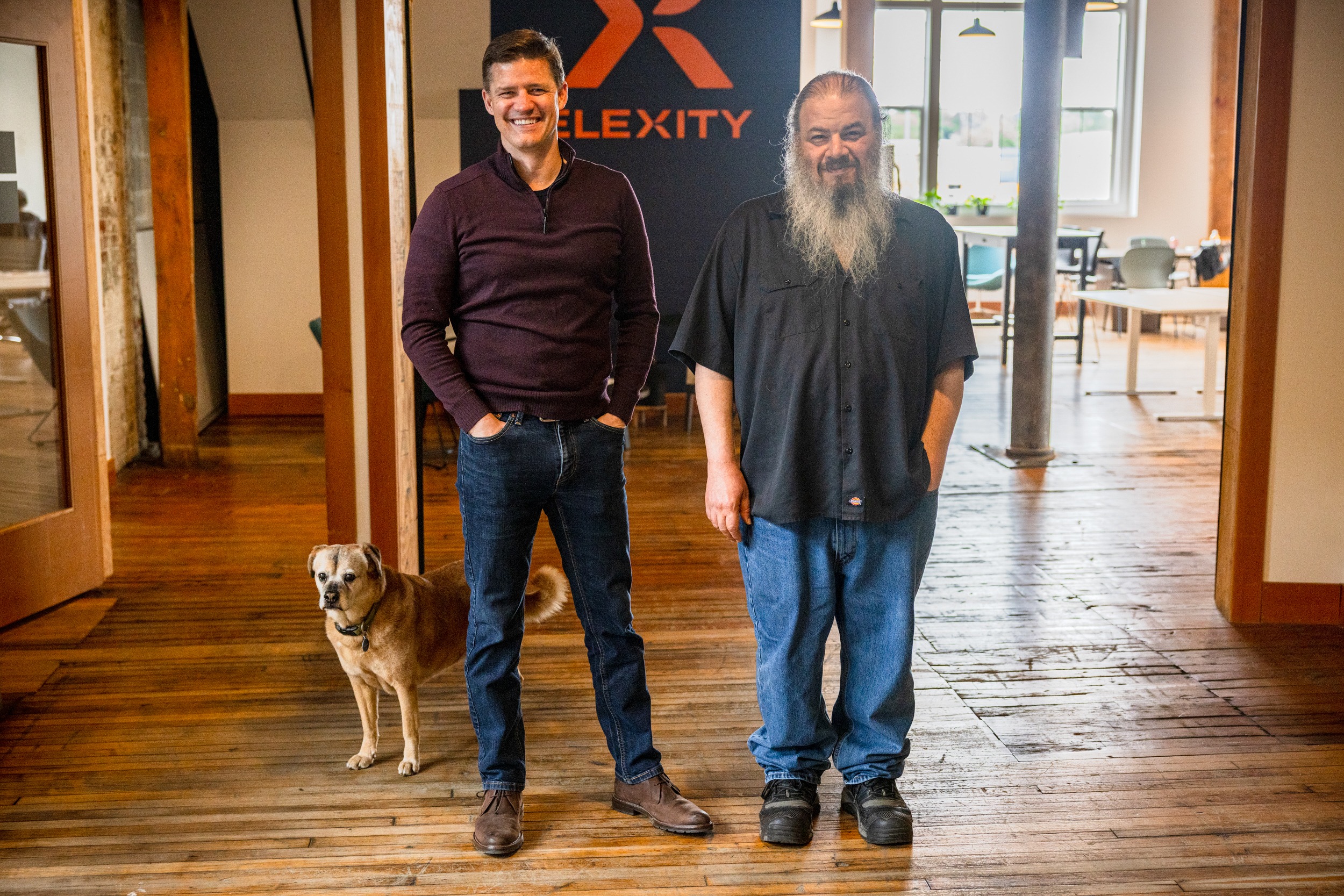
Q: So it sounds like there’s a very specific niche you’re filling that didn’t even exist five, ten years ago.
Stu Statman: Exactly. We can say to the utility, “Look, we can solve what’s behind the meter. We can bring all this stuff together. We can talk to all of these disparate components. And if a building owner brings in another component that’s yet another protocol that’s not quite the same as any of the others, that’s not a problem. We’ll solve that problem for you, too.”
MG: We provide the software that serves as the energy operating system for a building. We keep your bill as low as possible. But then we also help you take advantage of utility programs that will pay you money if your building can respond in an automated and smart way when the grid needs support.
Q: So this is a win-win for both the utility and for the building owner.
SS: Yes. Of course, it’s not without its challenges. The challenge from the utility’s perspective is that they are still very used to this one-way flow of energy. Historically, buildings were fairly predictable. The building turned on in the morning, people arrived, your HVAC turned on. If it was a hot day, you’d get a specific curve of cooling. If it’s a cold day, you’d get a specific sort of curve for heating.
But now, all of a sudden, you have these smart thermostats that are trying to play against the price schedule; you’re getting different shapes than that steady, historically predictable curve of energy. With EV chargers, you all of a sudden get these huge, sustained 30KW, 60KW, 90KW spikes that then just drop back down to zero. It’s the utility’s job to have exactly the right amount of power to match the demand at any moment. And because the shape of the power consumption of the building is changing across the day, the utility is actually experiencing problems.

What we’re doing is we’re trying to smooth the shape, to change the shape of that building back to what utilities are used to. We’re trying to smooth those big EV charger spikes, for example, by having a battery to blunt them. We can also say, “Hey, this is an expensive time for an EV charger to run. Let’s dial those EV chargers down and then widen that valve up again an hour later when there’s better consumption. Move the HVAC around so that it’s smoother again.”
It’s this push and pull between the building constantly morphing its energy usage and people trying to provide smart systems that are point solutions. Often those forces are fighting each other and not collaborating, and they’re causing very odd outcomes for this utility who’s trying to manage the grid as well. Add in a bunch of solar, and you get too much solar pouring back in, then the grid voltage spikes. It’s a really interesting set of problems. It’s exciting to try and solve them.
Q: Would you say, ultimately, that your customer is the utility or the building owner?
SS: We’re on the side of the building owner. That’s our customer. That’s not to say that we’re enemies of the utility, because what we’re trying to do is create an environment where the utility is getting what they want and what they need, while providing to the building owner a lower electrical bill and more reliable power.
The building owner says, “Look, this is what I think of as comfortable in terms of heating and cooling. This is what I think of as comfortable in terms of when I want to use my EV charger.” Whatever it is they might be doing. And then it’s our job to operate the system to stay inside of those bounds, keep them comfortable, get their bill lower, and make it so that they’re on the same side as the utility.
 Q: Can you tell us about your customer base? Who is using this technology now, and do you see that expanding?
MG: We are entirely focused on commercial buildings right now. We have customers that are as small as 5,000 square foot buildings, and we have customers that are hundreds of thousands of square feet. There’s definitely some low-hanging fruit for us right now: buildings that use a lot of HVAC, or tend to have solar, or tend to have EV chargers. Those are typically schools, offices, and retail. We’ve seen some light manufacturing. And then as batteries have been coming down in price over the last couple years, we’ve been able to expand to even more types of buildings. Multifamily buildings have become an interesting category for us. Warehouses, cold storage, lodging.
Q: Can you tell us about a real-world example of your product in action?
MG: We’ll start with one of our oldest customers: Stapp Interstate in Colorado. They started by installing solar panels. But as the solar gets used up over the course of the day, the building load’s still there, so you still get this huge spike in power grid usage. They found that after installing solar their bill went down by some, but not nearly as much as you’d think. By adding in our HVAC controls and making it solar-smart, what we’re able to do is kind of shift when the HVAC was running so it took more advantage of the solar production, which meant it wasn’t running later. We wound up lowering their power charges by roughly $20,000.
No battery required. We used the building like a thermal battery.
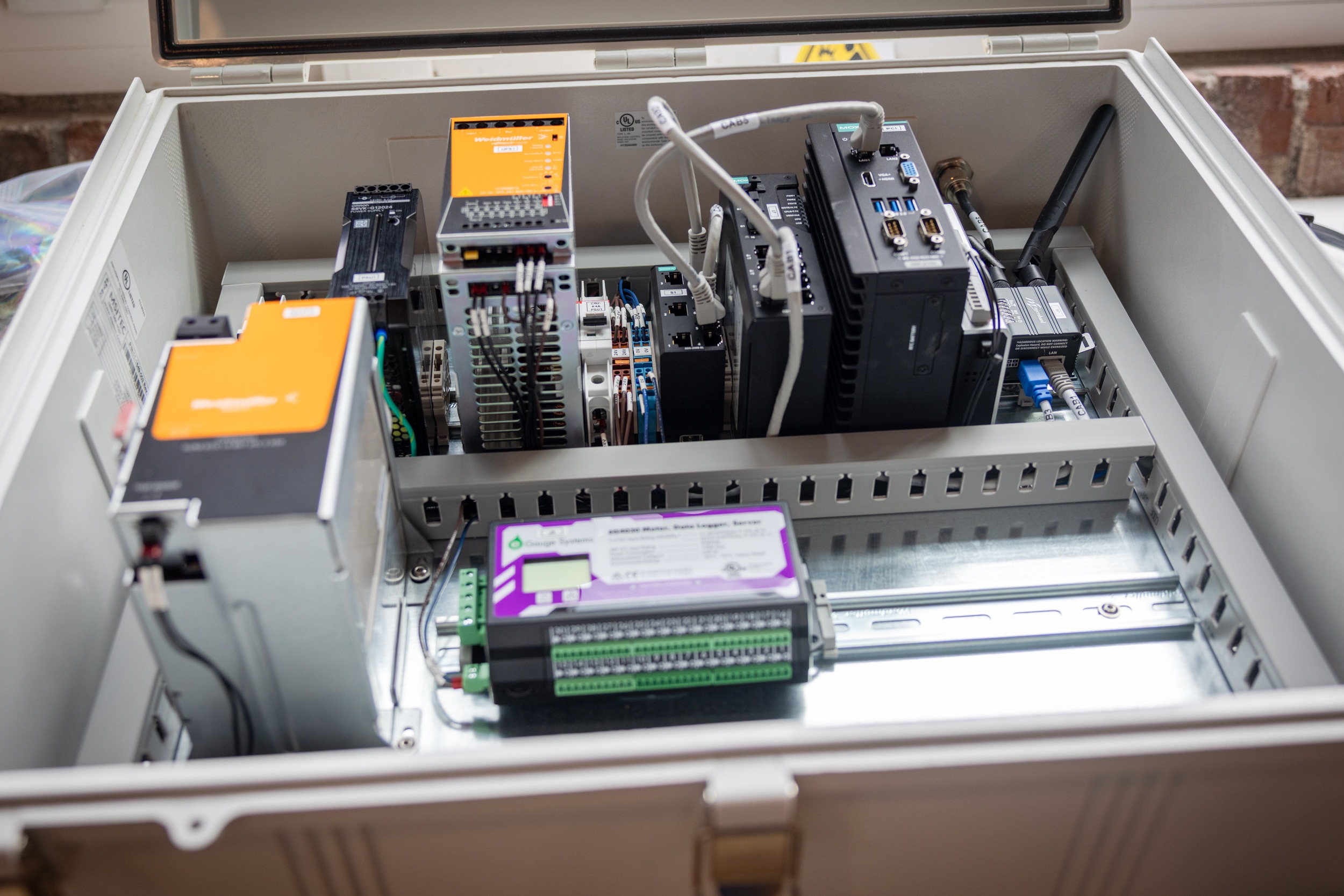
Q: Twenty-thousand dollars seems like a significant cost savings.
MG: Absolutely. One of the challenges for a lot of our customers is understanding, okay, if I install your system, what does it do for me? How do I know that this is going to make money?
It’s actually really, really hard to answer that question.
A lot of what’s actually happening at Elexity right now is developing tools for doing financial modeling across multiple scenarios. The hope is that if a customer says, “Well, here’s my building, what can I do?” we can say, “Well, first of all, upgrade to smart thermostats, put in a battery this size, put in solar this size, and change to this utility tariff, and that will save you this amount of money a year.” And so actually a lot of the work here is that.
Q: Why do you feel like this is the right technology for our current environment?
SS: We’re entering a period where there is a very high risk of significant grid instability—a mismatch between supply and demand at any moment.
But solar is becoming more and more widespread. There are more batteries, and the economics of batteries have improved so dramatically in the last 10 years that all of a sudden batteries make sense where they didn’t make sense before. Solar is cheaper than coal. All of these things are conspiring together to create a situation where grid instability is a very strong possibility. But the grid is a social good. The grid has to stay stable. We can’t afford a world in which the grid becomes a problem. Everybody has a part to play in this. Utilities have to start moving forward on this stuff.
A company like ours can step in and say to the utility, “Look, we’re going to stabilize this part right here. We can’t solve your transition problems, and we can’t solve all of your other production mismatches, and you’re not going to install one of our systems at a data center, but we’ll stabilize this part and then we’ll work with anybody who we need to work with to stabilize the next part and the next part.” I think that there’s a huge opportunity for us. If we don’t solve it, somebody’s going to have to or there will be significant grid problems.

Q: Where do you see Elexity in one year?
MG: As I mentioned before, if you’re going to sell this thing, you’ve got to show a customer what to do and how much it’ll save them. You have to build a whole modeling and simulation tool on the front end to sell the product. We want to take that tool and put it in the hands of the developers and energy contractors out there that are out doing the selling. So goal number one is to go from three salespeople to 30,000.
In the last year, we launched a new product which is more focused on front-of-the-meter [editor’s note: the utility side of the meter] battery systems. We’re seeing an increasing amount of interest and requests coming in for batteries that are on the distribution grid, so we’re working to meet that need.
Q: Are there any partnerships that you’re particularly excited about?
MG: Yes! Last year, Toyota America, the corporate group, ran an RFP because they were looking for an energy management solution that they could push out to their dealerships. They’re always trying to help their dealerships operate better and more efficiently. They’re going to be rolling out more models of EVs, and they’re asking their dealers to install more EV chargers. Now everyone’s like, “What’s that going to do to my bill?” That’s where we come in. We got selected, and we became the preferred EMS that Toyota recommends to every one of their dealers. It’s really exciting.
Q: Why did you feel that Portland was the right place to build your business?
MG: Portland’s an amazing resource when it comes to the energy industry. We are the Northwest power hub between BPA, Pacific Power, the old PPM Energy, Portland General Electric. There is a lot of institutional energy and power markets knowledge here from engineering to markets to regulatory policy, everything.
It’s also a great place to attract talent. You have a lot of people who really care about the mission side of what we’re doing here. If this becomes as widespread as we want it to be, it should enable a 100% renewable grid that’s more reliable than the one we have now—and cheaper. There’s a lot of people who come to Portland or live in Portland that also love that vision. So it’s a great place to try and grow a company like this.
SS: I want to work with people who are less stressed out. And so it’s nice to work in Portland. I was in San Francisco for years, I was in Seattle for years before that, and I was in New York City for years before that. I love working in Portland. It just feels like a much saner environment. It’s an easier environment to get good work done. It goes a real long way when people like where they live.
Photography by Sheepscot Creative