Company Spotlight: Photon Marine
At the forefront of the marine electrification movement, Photon Marine creates electric outboard motors for commercial applications across a number of industries.
We spoke with Marcelino Alvarez, Photon’s co-founder and CEO, at the company’s headquarters in St. Johns about how the idea for the company was born, why an iterative approach was the right strategy for growth, and where Alvarez sees the electrification movement going next.
Q: Please introduce yourself and tell us about Photon Marine.
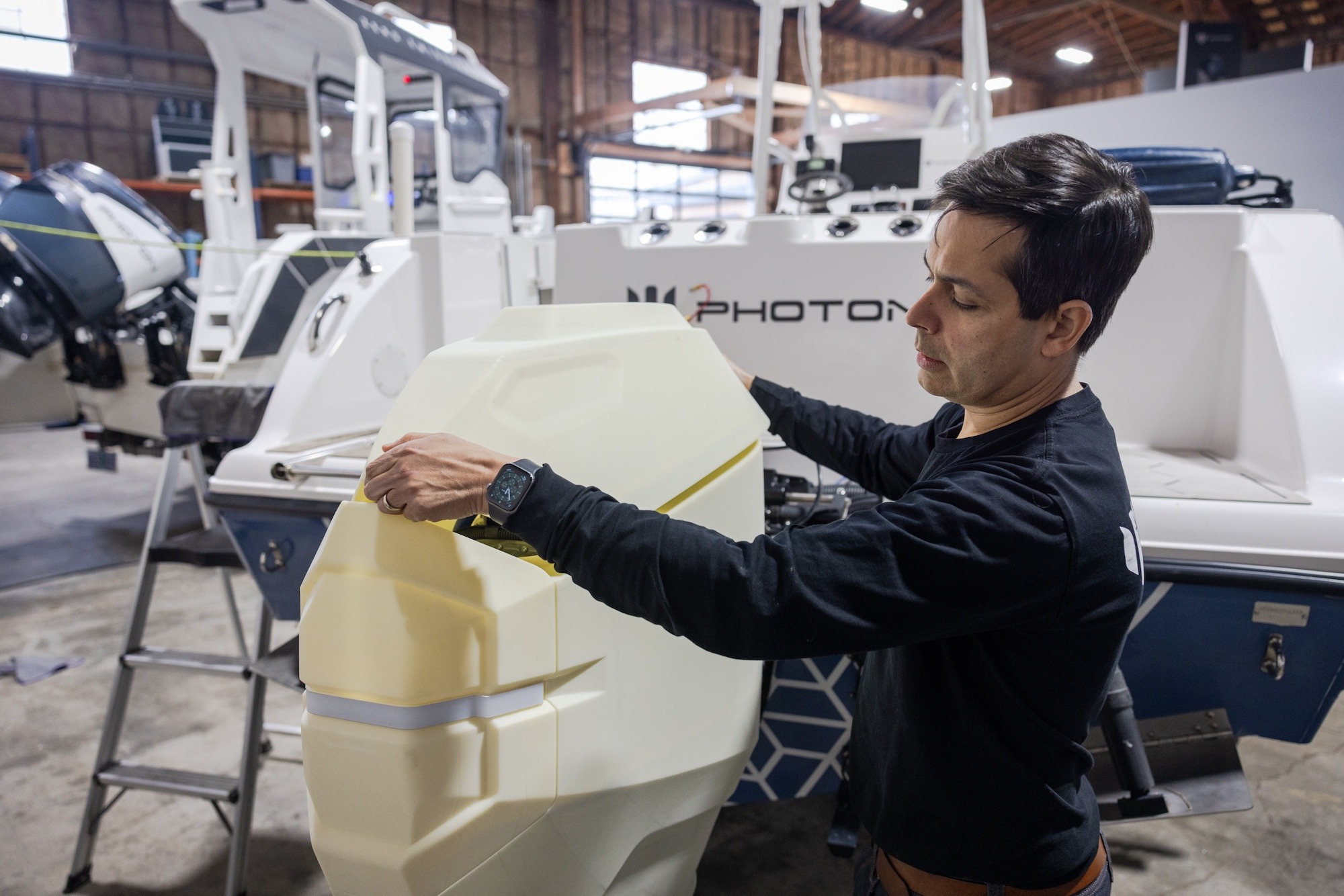
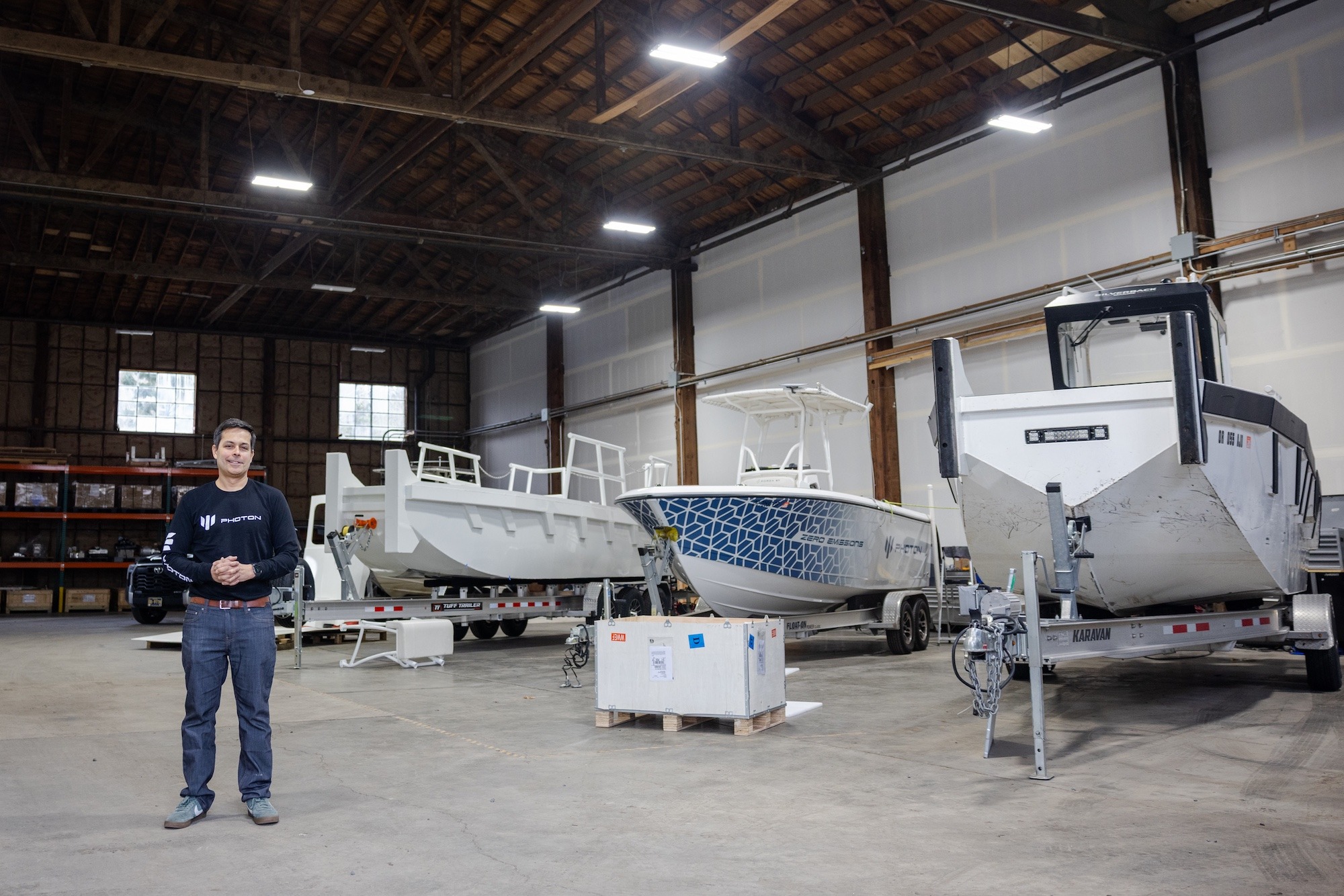
Marcelino Alvarez: I’m Marcelino Alvarez and I am the co-founder and CEO of Photon Marine. We’re here at our facility in St. Johns, Portland, where we build, assemble and test electric outboard motors that are used on commercial work boats.
Q: Where did the idea for Photon Marine come from?
A: I connected with a buddy of mine whose background was fisheries nonprofits. We started talking about some of the needs that artisanal fishers had in Jamaica, specifically around how they might transition from old two-stroke outboard motors to electric propulsion. As a boater, I was familiar with a couple of companies that were doing lower horsepower electric outboards, but no one was really building higher horsepower electric outboards. I thought that could be a neat side hustle, like a “nights and weekend garage project.”
I reached out to a mutual friend and asked, “Who do we know that can build electric outboards?” That’s how I got connected to our CTO and co-founder, Nick Schoeps. His background is in electric motorcycle design and manufacturing.
Nick said, “Look, you’ve got to find a use case that makes sense for electrification because the physics of pushing a boat through the water are tricky.” This was still during the pandemic, so all the big electrification conferences were taking place virtually. I signed up for a bunch of them—some in the U.S., some Europe. A number of those conferences had case studies on fleet electrification, specifically school bus fleets and municipal bus fleets. The benefits to transitioning to electric were economic—maintenance and just cheaper total cost of ownership; you could also do things like plan charging around the stoppage time and the route times. You could size the batteries to be appropriate to what the routes would be and you could size the power of the electric motors to meet those needs.
I thought, “Maybe we’ve been thinking about this wrong. Maybe instead of making something for the artisanal fisher or the recreational boater, the optimum market for electrification is one whose duty cycle looks like a bus.” We came up with a list: research and survey, ports and utilities, construction vessels, oyster farms, kelp farms, farmed fish. Also marine enforcement, boats that just kind of loiter in state all day long and once or twice a day blast up to go chase after somebody. And there’s crew transport, dive boats and tourism applications, snorkeling and water taxis.
All those applications are great for electrification because you know exactly when the boats will be running and when they’ll be stopping. By contrast, the things that don’t make sense for electrification are commercial fishing, because the fish aren’t always in the same spot, and search and rescue, because you don’t know where the asset’s going to be and how fast you need to get there or if you might have multiple runs in a day.
We started with that list. We know the battery tech’s going to get better, but this way we could focus on medium to heavy duty applications. Ultimately, I knew we’d be able to leverage incentives because I think one of the things that was evident then, and I think is more so now, is that you’re never going to see an EV incentive for a recreational boater to turn their gas boat into an electric boat. But on the commercial side, states like Washington, California, Michigan, New York, a lot of European countries, and a lot of Asian countries are making that transition possible through incentive programs that benefit commercial operations. So far, we’ve won grants in Canada, grants in Washington, recently been verbally awarded another federal grant, and then we’re in diligence for a UK grant that would allow us to do some work in the Caribbean.
Q: That leads us to the business itself. When did Photon Marine officially begin?
A: We officially set off on our journey in January of 2022. We’ve spent the last four years on research and development, understanding customers in the commercial space that would benefit from electric propulsion.
We’ve gone through several iterations of our technology. It now consists of an outboard motor, the battery system, the throttle and controls for the system. Then we’ve got software that sits on the vessel in a mobile app on the cloud. We’ve worked through about seven versions of that prototype and we’re now gearing to deliver our first production units to customers this year.
We’ve raised a number of rounds of financing. The most recent was a seed round back in 2023 for $5 million on a $15 million pre-money valuation. We’ve been fortunate that we’ve been able to leverage non-dilutive grants and other programs to extend our runway to where we are today.
Q: Were there any collaborations that helped you along the way?
A: One of the early things we benefited from was working in a startup-style garage that was literally across the street from Daimler Truck North America, where a bunch of EV enthusiasts and consultants were working in smart transport and the conversion and electrification of things.
We were able to leverage the proximity of that space to do a few things. The first benefit that came to us was in terms of hiring. Hiring as a startup is risky; but you can reduce that risk by working with subject matter experts. We also didn’t have to buy any equipment. We were able to leverage a large warehouse full of all the tools that we needed. And I think, more importantly, you had these random collisions and interactions because all these companies were pulling in people who were working on electrification. You could say, “Hey, I’m banging my head against the wall on this problem,” and someone might just be there who could take a look and give you pointers. During that time, we were all like kids in a toy store. Everyone celebrated everyone else’s wins. It was a good way for a small team to feel like we were part of something bigger.
We had people there that had worked on electric boats, had worked on electric trucks, had worked on electric software, and we were able to really leverage that for our early prototyping. We were incredibly fortunate, and that strategy enabled us to get our first prototypes on the water within five months of jumping into Photon full-time. The second version of that prototype, which is the predecessor to what’s going into production now, was in the water just six months after the first one. Within 12 months, we had two very different prototypes, one of which is foundational to what we’re bringing to production. Without those collaborations and resources, I think it would have been really difficult to be as lean and as scrappy and as capital-efficient as we were.
Q: You mentioned that Photon Marine will benefit from government incentives. What are your thoughts on incentives for electrification?
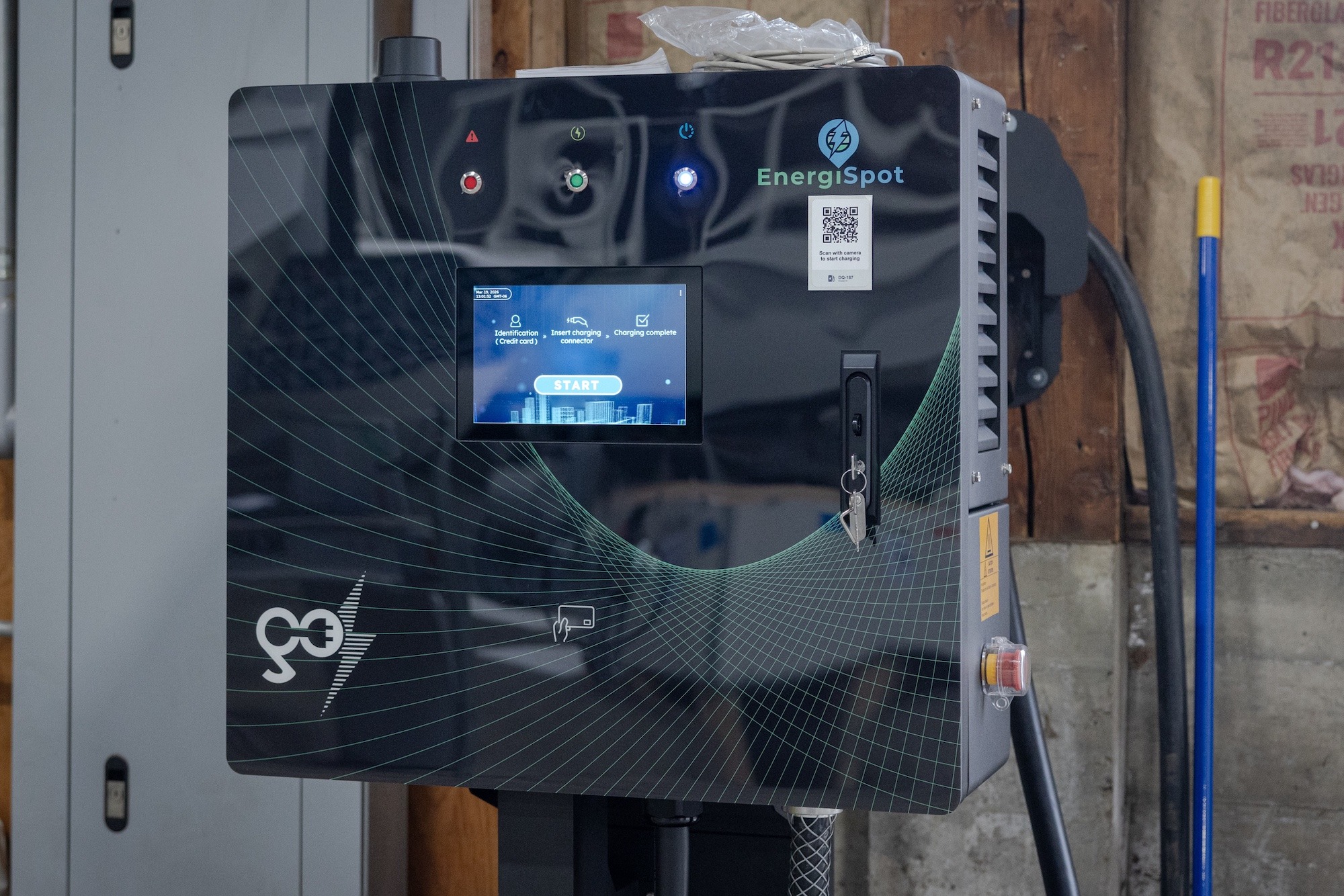
A: We don’t think that a regulation-first approach to decarbonization is a successful way to make the transition to electric vehicles. We prefer to balance the stick with the carrot, and I think both California and Washington have done a really good job of that. Incentives such as CARB/CORE and WAZIP effectively pay for the upfront cost of batteries, which creates cost parity with a gas outboard motor. That allows that operator to make the switch without paying for seven years of energy storage up front.
Washington also has a program for tribes to transition to electric boats. Those programs are making it easier for us to sell into those markets. They’re not the end-all, be-all, but once you get an electric vessel into an area and other people see that electric vessel in action, they’re like, “I want that. How do I get that?” These programs help a lot.
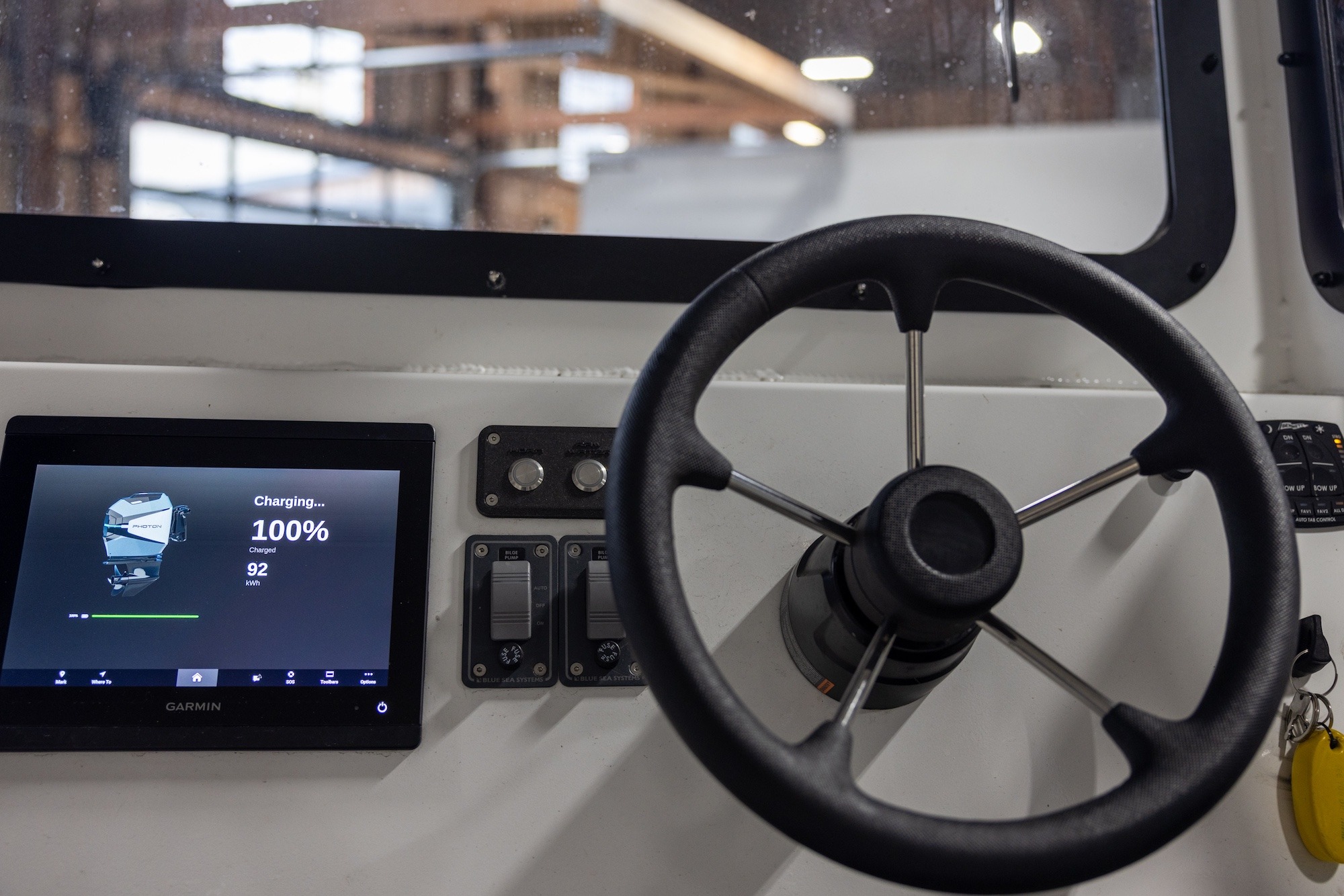
Q: Can you describe the physical products you create in more detail?
A: We are generally focused on the electric motor that goes in the back of a boat. We generally don’t care what that boat looks like. It can be an aluminum work boat. It can be a fiberglass crew transport boat. It could be a water taxi. That being said, efficiency matters. Which is why we work with a number of boat-building partners across the world who are interested in designing the best platform for a particular application. From Washington to Michigan to South Africa, we have established partnerships with some of the top boat builders in the world.
Our goal, at least for the first few years, is to deliver bespoke new vessels that are tailored for electrification in partnership with commercial boat builders. At scale, we can certainly contemplate refitting existing boats with electric motors. As the batteries that we use get smaller in size, it becomes easier to drop those into existing boats.
Q: What’s been the response from people in the industries you’re designing for?
A: The story that resonates is not a “clean” story, it’s not an environmental one—it’s purely an economic one. We recognized that early on because our operators are not driven by the green hype. The response we got was, “We’re operators. We care about the bottom line. Will this help my bottom line? Will this meet my needs?” We never had to pivot because that was always foundational to our story. Once the economic element is in place, they get the ancillary benefits of being able to say, for instance, “I’m not smelling anything. That’s nice.”
We were doing some demos up in Seattle with a person who was high up in the Alaska fishery scene, and she brought her husband, who’s a commercial fisherman. He thought that our concept was ridiculous. He didn’t want to even come out and test it. He was dragging his feet the whole time and didn’t even want to get on the boat. We had just left the dock and gotten underway when he turned to me and said, “If I would’ve had this engine earlier in my career, I would still have my hearing.”
When we returned to the dock, he asked, “How do we get this everywhere in Alaska?” It was a complete 180-degree turn, from “This is stupid,” to, “How do I get this everywhere?”
But those ancillary benefits are important, too. Think about talking at a normal level of conversation while underway on a boat. Over time that preserves your hearing. There are also safety ramifications. Think about being on a dive boat and trying to give safety commands to people who aren’t necessarily boat experts—you want them to be able to hear you.
In military and surveillance applications, the lack of noise is certainly beneficial. With hydrography and research, gas motors pollute the sensors that are being used to do water quality environmental monitoring, and the vibration can be enough to throw off their instruments. You get higher quality readings with a quieter, softer motor.
Our motors are also designed to be lower profile and height, which means that you can have a lower center gravity for towing. Your lines aren’t hitting your outboards, so you can have more visibility.
We designed our boats with the operator in mind. One of our boats can be maintained without taking it out of the water. We intentionally made that part of the design because right now gas boats have to come out of the water. You have to do a gear lube change; you have to do a spark plug change every few hundred hours. Ours is a 1,000-hour maintenance cycle versus 1 to 300 hours.
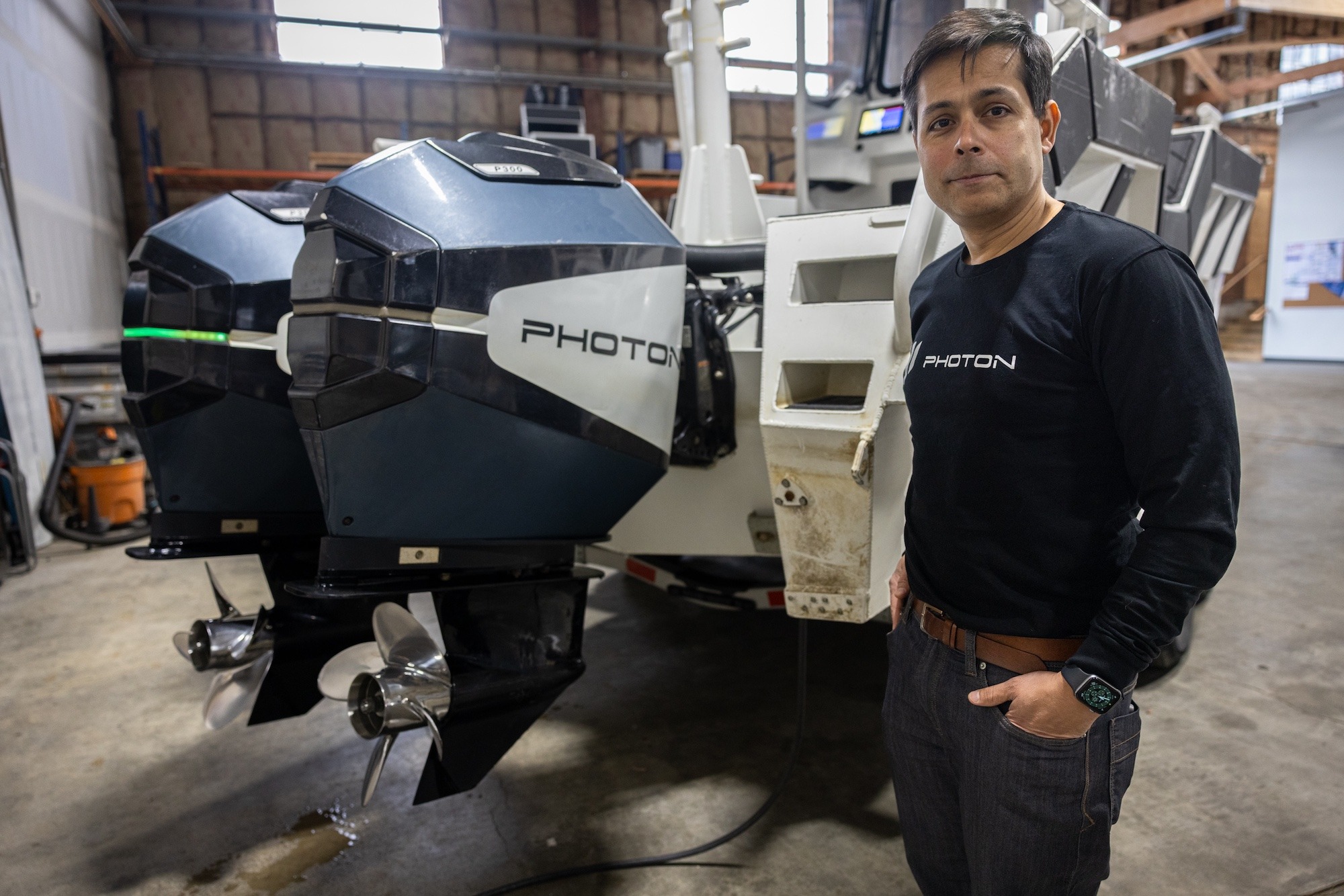
Q: What about Portland makes this a good ecosystem for your business?
A: First, the Portland ecosystem has the right blend of design—digital design, industrial design, and physical product design—that makes it a compelling place to build hardware. If you look at the intersection of apparel and outdoor, the storytellers and the product designers, we have really great design talent here.
I also think that the industries here create little mini-ecosystems around rapid prototyping and rapid development. You’ve got Autodesk here that builds a lot of the design software for those platforms. There is a strong technical and design base to support the design and building of physical things.
We are a city bifurcated by two rivers, one of which flows more water into the Pacific Ocean than any other West Coast river. We have the engineering and manufacturing resources to build big steel aluminum things here, and we have the expertise.
Ultimately, we’re Portland, right? We have the resources to build the boats. We have the resources to build the motors, and we have the resources to do the design and engineering to support the technical aspects. It’s all here. I’m looking forward to calling this home for some time.
Q: You spoke about the process of building the company slowly, minimizing risks and leveraging connections where you could. Can you speak more about that strategy?
A: From the outset, we recognized that it would be very tempting to build everything in-house and say, “Hey, we’re building this electric outboard motor system. We want to design everything and own everything.” But we took a very pragmatic approach to how we validated our technology. We wanted to balance risk at each point of our company: technical risk, organizational risk, and business risk.
On the technical side, that meant intentionally working with existing, readily available components so we could just focus R&D on one aspect at a time. We intentionally chose not to design our own throttle. Even in the first motors, we took an existing gas outboard and ripped off the gas, the actual engine, and stuck an electric motor in it just to validate whether the software of this motor could work to push this boat through the water. We took that as a very iterative, intentional approach.
For us it was always, “What can we accomplish in three months? What do we want to test in three months? Let’s focus on that,” versus trying to…forgive the pun, boil the ocean all at once. “Let’s just start with a couple smaller experiments. Carefully pick and choose, and then we can always come back, source something off the shelf and decide to focus on that.”
The other thing that we did was that we chose not to hire for everything. We worked with a number of consultants, freelancers, and partners along the way, and that allowed us to operate in both lean times and flush times without burning through capital. Then whenever we were at a point where the threshold was so high that we really needed this resource in-house, great. We’d figure out how to do that. That scrappy, prototype-driven mindset has allowed us to survive.
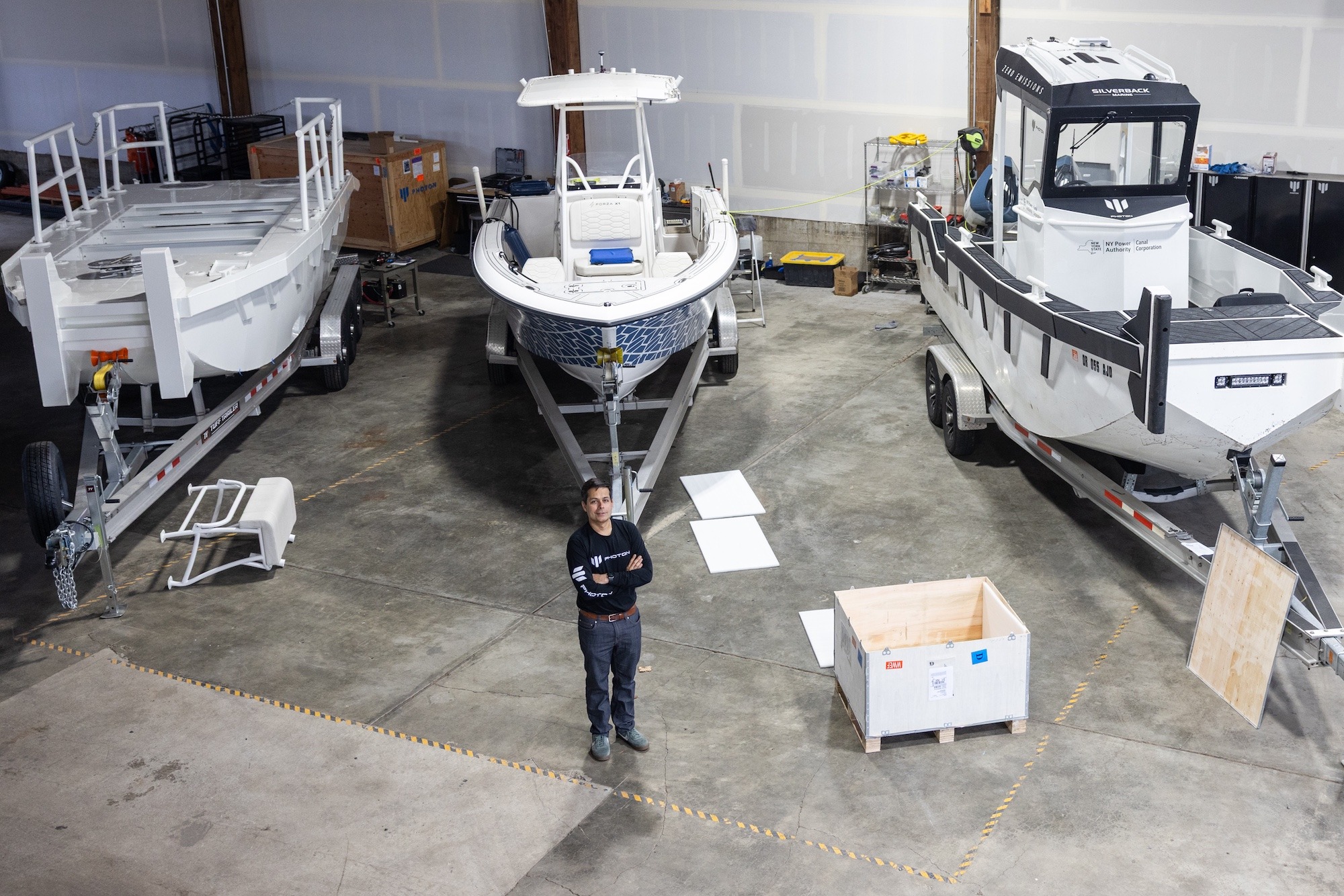
Q: What’s on the horizon for Photon Marine?
A: We are delivering our first units to customers this year. We won a $7 million grant with the Port of Friday Harbor in the San Juan Islands that was sponsored by the Washington Department of Transportation, also funded through the Climate Commitment Act. They’re going to get four electric workboats with high-speed chargers.
We’re excited about that because the San Juan Islands are a beautiful, navigable body of water with a mix of recreation and commercial applications. Those chargers are going to allow us to transform that area in a number of ways. The program there also includes a solar canopy, a microgrid, and an electric boat lift. We took the attitude of, “Let’s de-carbonize this port.” And we think that that is going to be a leading example in marine de-carbonization, not just in the Pacific Northwest but globally. We’re excited to get that program underway. The first boats will be delivered out there this summer.
We also continue to work with the New York Power Authority. They’ve been a partner of ours for the last three years. They operate the hydraulic dredge operation on the Erie Canal, which is now 201 years old and one of the foremost innovative infrastructure examples from early in this nation’s history. We are a part of their innovation story moving forward. It’s been great to work with them. We’re shipping a boat out to them later this year that hopefully they’ll purchase at the end of the year. And then we’ve got boats going to California, boats going to Washington, as well. And then we’re seeing a lot of interest in water taxis; we’re trying to build a few prototype vessels later this year in that water taxi class to validate some designs that we have.
We’re working on financing, as well. We’re trying to close a financing round that’s going to allow us to meet the demand and set our team up for the next chapter of the business. It’s busy. There are times where it’s incredibly rewarding and times where it’s incredibly challenging. Balancing your energy through the highs and lows is one of the keys to entrepreneurship. Celebrate the small wins along the way, learn from the losses, and acknowledge that the journey is neverending.
In addition to his role as the CEO of Photon Marine, Marcelino serves on the Prosper Portland Board of Commissioners.
Photography by Sheepscot Creative