Company Spotlight: Karina Hershberg of PAE
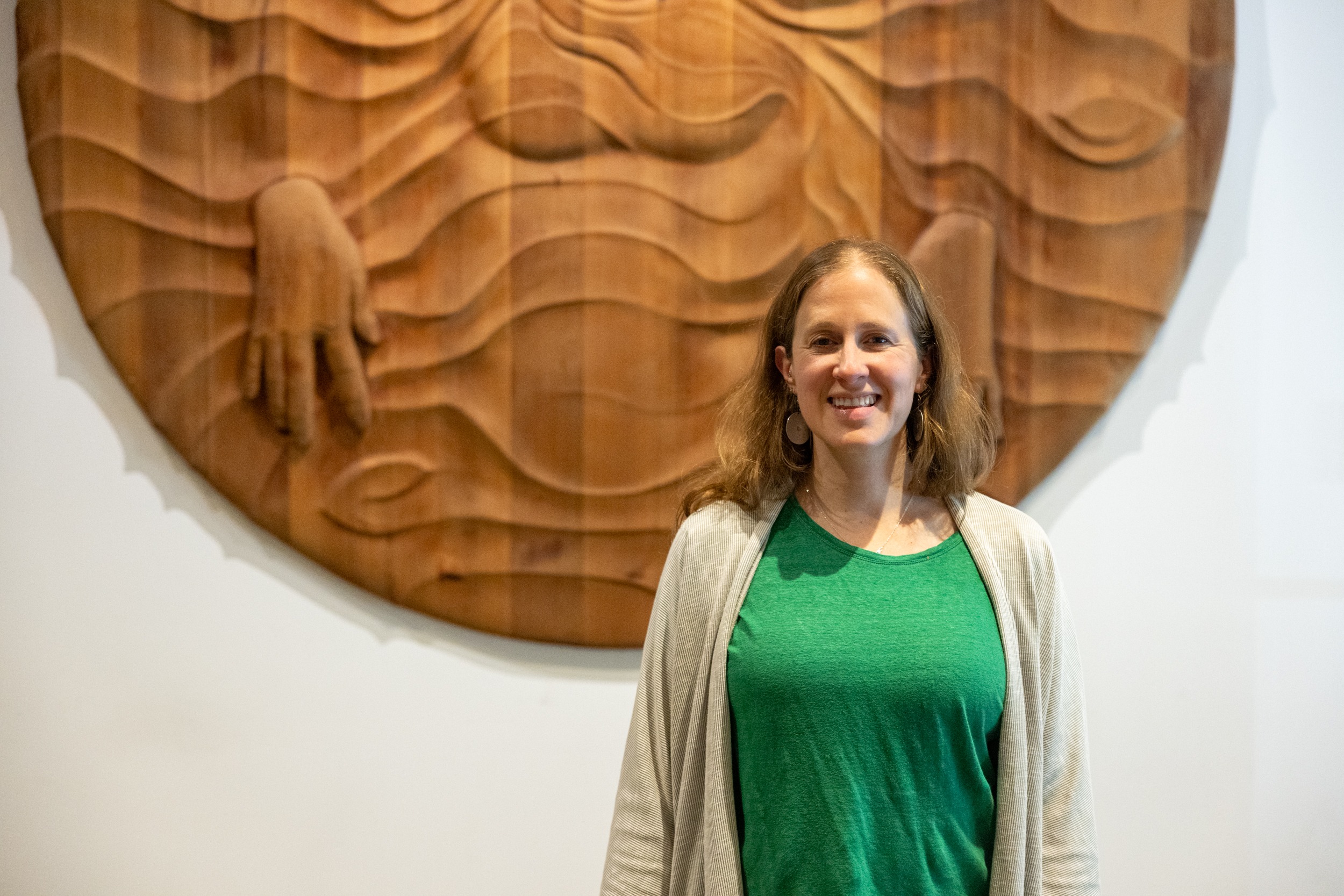
Innovation has been the throughline of Karina Hershberg’s career. It’s what first piqued her interest in exploring sustainable building and engineering, and what eventually steered her towards a position at PAE, the groundbreaking engineering and design firm. Now an Associate Principal at PAE, Karina leads the charge in exploring and modeling the ways in which buildings and microgrids can ensure a more sustainable, resilient energy system.
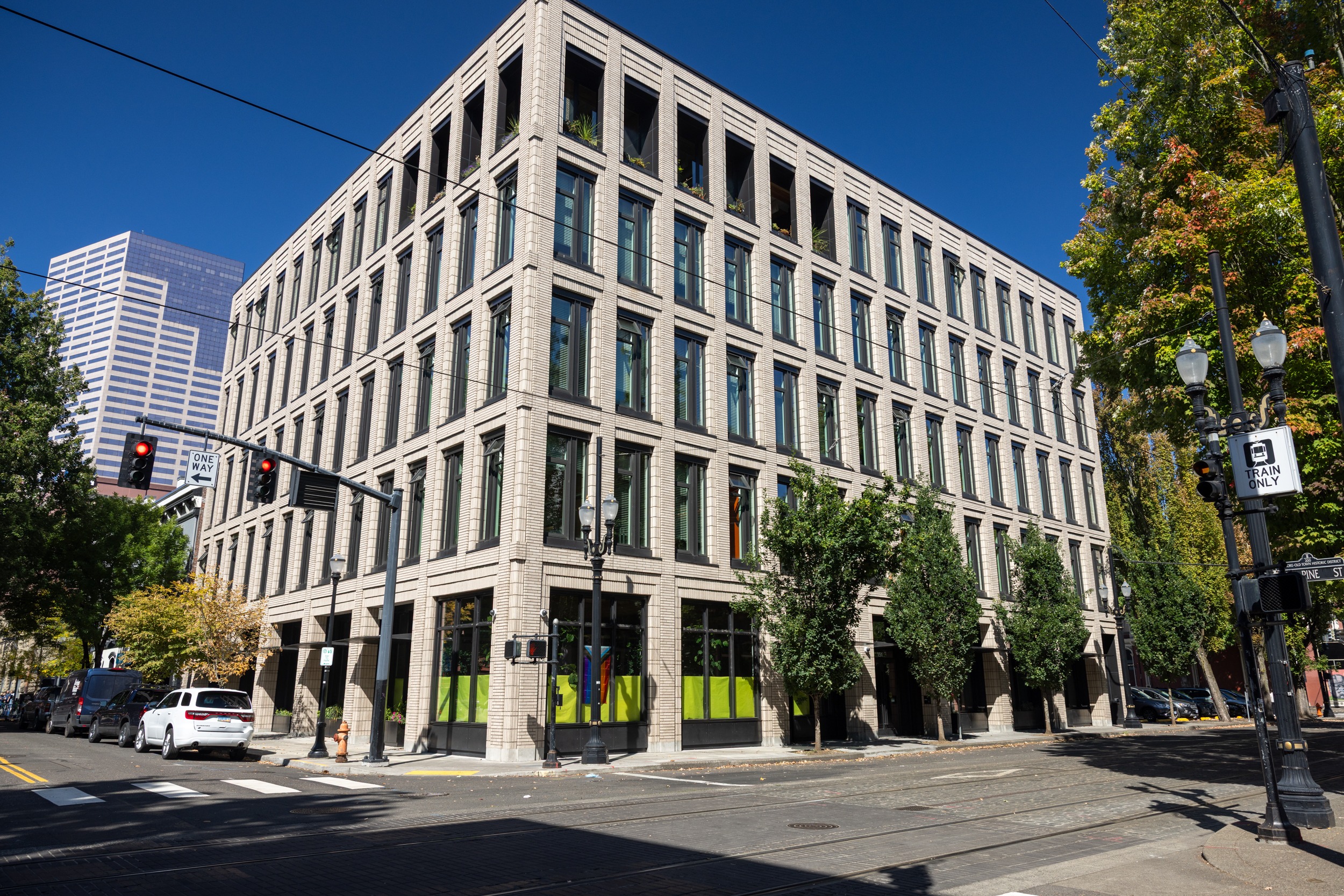
We met with Karina at PAE Living Building, PAE’s Portland office on Southwest 1st Avenue, to learn more about her career and her visions for the future.
Q: In a nutshell, could you sum up for us what PAE does?
Karina Hershberg: At its core, PAE is an engineering consulting firm that works in the built environment, on the design side. We do electrical, mechanical, plumbing, technology, lighting and then regenerative design. As a national engineering and design firm, we combine leading engineering expertise with the full spectrum of sustainable design consulting services. We serve as dedicated and strategic partners with our clients to ensure economic, operational, and sustainability excellence in every project, from ideation and throughout its lifecycle.
Q: What’s your role at PAE?
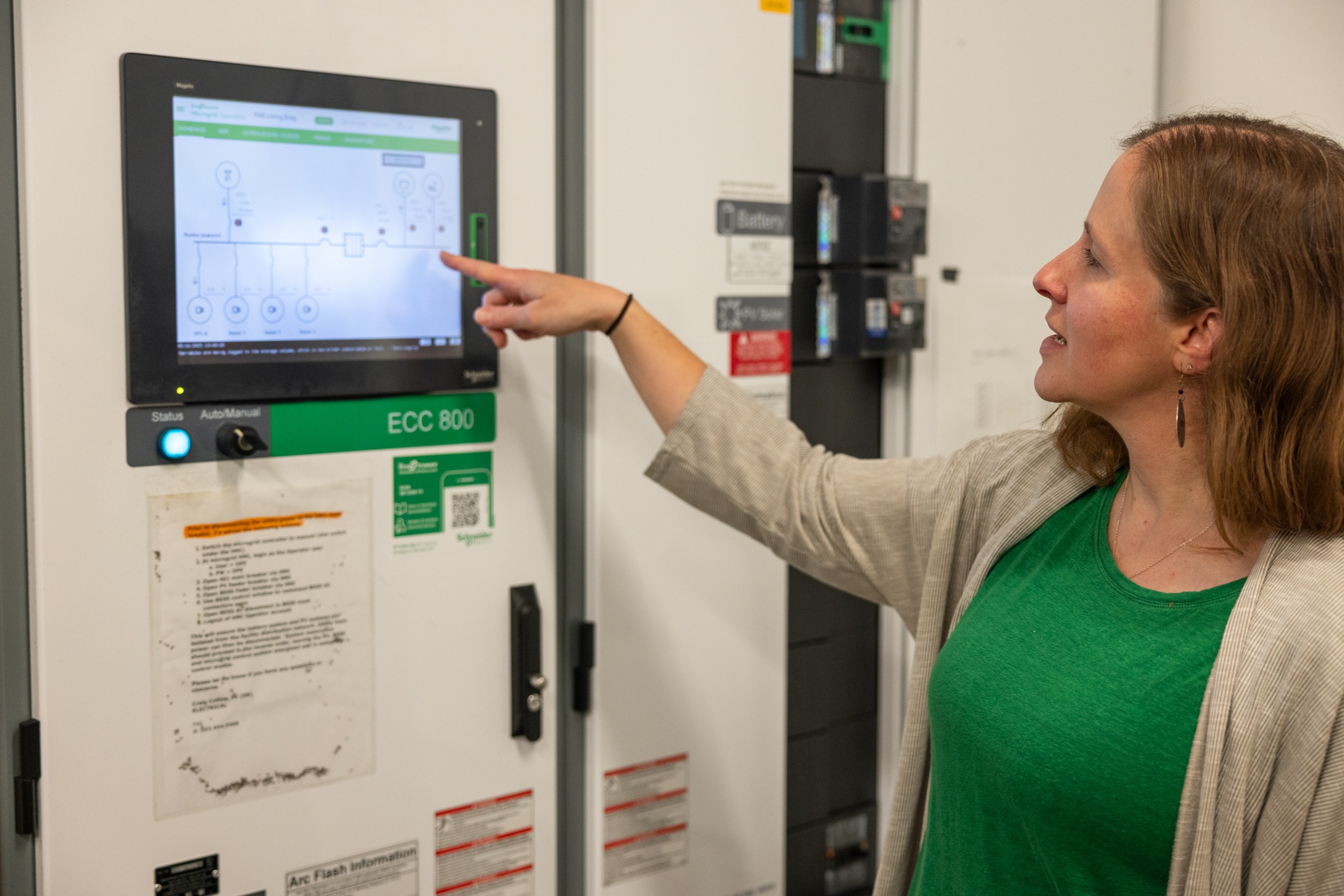
KH: My role now is actually split. I am a regional leader for our Regenerative Design group, which is our modeling,analysis, systems thinking and data analytics teams. And then I also co-lead our Distributed Energy Systems work, which is more on the innovative energy and microgrid side.
Q: Tell us about your career path and how you got here.
KH: I got my degree in engineering from Oregon State University. And I’ll be honest, when I graduated, I didn’t know about the building industry. I was good at solving problems, but I didn’t know much about any one particular industry.
I graduated during the dot-com bust. I was very interested in energy, so I had left school thinking, “I’m going to go do something in green energy,” but there were no jobs. And so then my goal very quickly turned into just, “I am going to get a job.”
So I actually started off my career in high tech. I worked in high-tech manufacturing, which is not anything related to green energy. It was a really interesting foundation, though, because it was very much problem solving, systems thinking and also how to innovate. I was working in a group that was the handoff point between R&D and then the large scale mass production manufacturing. That was a very interesting space to be in because you had one foot in innovation and R&D and then the other one was in the space of, “Okay, but how do you make a million of these?” So although high tech was not where my heart really lay in terms of the kind of work I wanted to do, it was actually a pretty interesting grounding to have.
Eventually I was ready to make a change, so I randomly reached out to a woman who I read an article about in SWE, the Society for Women Engineers. She was based in Portland and had been involved with some of the IPCC work on transportation. Bless my bold mid-20s soul, I just emailed her and asked her out for coffee. And so it was just really interesting to talk to her and learn about her career journey and how she’d ended up where she was. She connected me with more people and they connected me with more people.
And so I went on this six-month journey where I just got to talk to all these different people in all these different fields who were doing different things. When you come out of school, you don’t really know what you want to do, right? I had enough grounding in the working world to know what I wanted in terms of the kind of company culture that I was interested in and the kind of work that I wanted to do. So that was how I ended up getting connected with some people in the building industry and learning about this thing called “green building.” I started at another company initially, but I kept trying to figure out, “Who’s really doing the most sustainable work?” PAE kept catching my attention. At the time, PAE was actually quite small and probably one of the lesser known consulting firms in Portland, but there was such a heart to it that it just instinctively felt like it would be the right fit.
And so I moved over to PAE. I’ve had the opportunity to grow as PAE has grown up and has now become nationally known as a leader in sustainability and the built environment. The work that I do now is in the more innovative space, which the building industry and the design communities aren’t necessarily as known for, so I’m able to pull from my high tech background. Merging the Silicon Forest innovative expertise and knowledge into Portland’s design community on the building side is a nice way to knit those two worlds together. And it has definitely helped influence my ability to navigate more innovative work in our industry because I have that foundation of how to do it in an organized and thoughtful manner.
Q: Were you aware of Portland’s status as an epicenter of the green building movement when you started your career?
KH: No, I had no awareness of it. I was just super excited to be around people who were interested in what I was interested in. In hindsight, it was a really unique and exceptional opportunity to get my sea legs in the hub of that work with some of the best professionals working at the time. And I’ve benefited from the fact that a lot of my key mentors were the absolute movers and shakers of that movement.
When you come up in that and you’re around some of the most innovative conversations that are happening…the result for me is that my expectation of our industry is very high. I have deeply held beliefs in what the built environment and the design community can do. And I do think it probably comes from the fact that that was the first thing I learned was that we could do great things. So why would I ever lower that expectation as I continued? I still believe we can do great things.
Q: It seems like reaching out and fostering those initial relationships in the industry worked out well for you. Is this something you’d recommend to people just starting out their careers?
KH: I think it is an excellent exercise to go through and I would encourage people to do it, but not necessarily with the expectation of getting a job. I think there’s a pressure that you’d put on yourself in those conversations versus just trying to come from a place of curiosity. Ultimately, it did lead to a job for me, but that came after many conversations. That process allowed me to ask questions that I maybe wouldn’t have been comfortable to ask if I thought I was soft interviewing for things.
I talked to people who were in transportation planning and people who were on the development side and people who were in the economics and finance side and the utility side and then the building industry, all these different spaces. What I ended up learning was that every sector, every job, every industry has a space for people who have that interest and a need for people who really want to go out and do something meaningful.
Q: What qualities do you look for when you’re hiring a new engineer?
KH: Honestly, what I’m looking for is smart, creative people who can problem solve and will work hard. Someone who can find something that catches their interest, and who will then want to go down the rabbit hole. I look for that more than a particular degree or resume.
I also think that communication and storytelling is a critical skill in an employee. One of PAE’s strengths, and part of why we’ve been so successful in being able to bring a lot of innovation to the built environment, is that we have an amazing Graphics team and we think a ton about infographics and information design. If you have a really complex idea but nobody else understands it, then it just sits on a shelf and it never gets implemented. So storytelling is just as important in innovative consulting work. When I’m hiring I look for those two sides: Do you understand the technical side, but do you also understand how to bring the team along with you, your client team along with you? That way when you reach the point that you can say, ‘The data says this, this is the right path,’ they’re right there with you.
Q: PAE was relatively small when you joined the company, and now it’s a big part of Portland’s green building community. What is PAE’s ultimate goal in the green building space?
KH: Our vision is a world of clean air, energy, and water for all. So it’s not a small dream. We say what we do is engineering that matters. When I started, PAE was about 65 people. Now we’re 450 and growing. And it’s been a very thoughtful growth. There’s always discussions of, “Why are we growing? What is the point of this growth?” It’s not just growth for growth’s sake.
And a lot of what it comes back to is just realizing that, if we want to bring our approach to design, which we think is the future of the built environment and a very achievable future, we need to touch more projects. So that by its nature means that we have to grow our capacity, so we can touch more things. But we’re also starting to do a lot more in policy and advocacy—we need to influence all projects, even those we don’t touch directly.
We are a triple bottom-line company, so we look at everything through the lenses of profit, people, and planet. There are definitely decisions we make that don’t make sense from a profit standpoint, but we’re doing it because of the benefit it carries for the planet and people.
Q: You’re known in the community as an industry leader in grid-interactive building design. What’s your vision for the field of grid-interactive building design?
KH: My work in grid-interactive building has been a 10-plus year journey. It started when I was doing some analysis on a project and things weren’t lining up. At the time, the industry was very focused on net-zero energy; basically, if your energy generation in a year equals your use in a year, then you’ve done it, you’re totally green. And I remember looking at it with one project and saying, “That doesn’t work. I’ve been told that the math works, but it’s not working. Why is the math not working?”
And it led me down this path. I started looking at emissions, and then that led me to looking at the grids. No one was talking about what was happening with the grids. Grids change every moment. It is a totally dynamic system, and no one was discussing it.
It’s not like I set out to become an expert on grid-interactive buildings because that wasn’t a thing. It was just every time I opened up another door, I was like, “Well, this is interesting. What’s behind the next door? What’s behind the next door?” and just kept working my way through. And so I’m at a point now where I’m fairly convinced that the future of energy systems is this idea of flexible and dynamic buildings. We have to think not just about our total energy use of the built environment, but when we’re using energy.
This work has helped highlight for me how disconnected the built environment is from the utility environment. Even though we are literally connected at the meter, we’ve operated in isolation from each other for so long that we’ve forgotten that the other side exists. And I think where we’re heading now—and I’m an optimist, you have to be an optimist to be in this kind of work—I am optimistic that in the next 10 years we are going to see a transformation of not only the grids and the energy sector, but the relationship between buildings and grids.
Q: What do you imagine will be the drivers and the barriers to achieving that vision over the next decade?
KH: Interestingly, data centers have started to drive those conversations. People have been caught off guard by them. They’re forcing conversations that I think groups were trying to have for many years, but it just never reached a point where it was serious enough that anybody was required to come to the table.
But with data centers, utilities no longer have the option to opt in or opt out of the conversations. There have been a lot more discussions we’re having with utilities where we’ll ask, “Okay, how do we think about our load shape? How do we reduce our peaks? What would it look like to have assets living on customer sites?” and things like that. It’s everything that needs to happen. We’re bringing these conversations to a broader audience, and I think that’s going to lead us to a scale of adoption that we couldn’t have even dreamed of five years ago. It’s a very interesting time to be in the energy industry.
Q: Is there a project in particular that you’re especially proud of or feel is emblematic of PAE’s work?
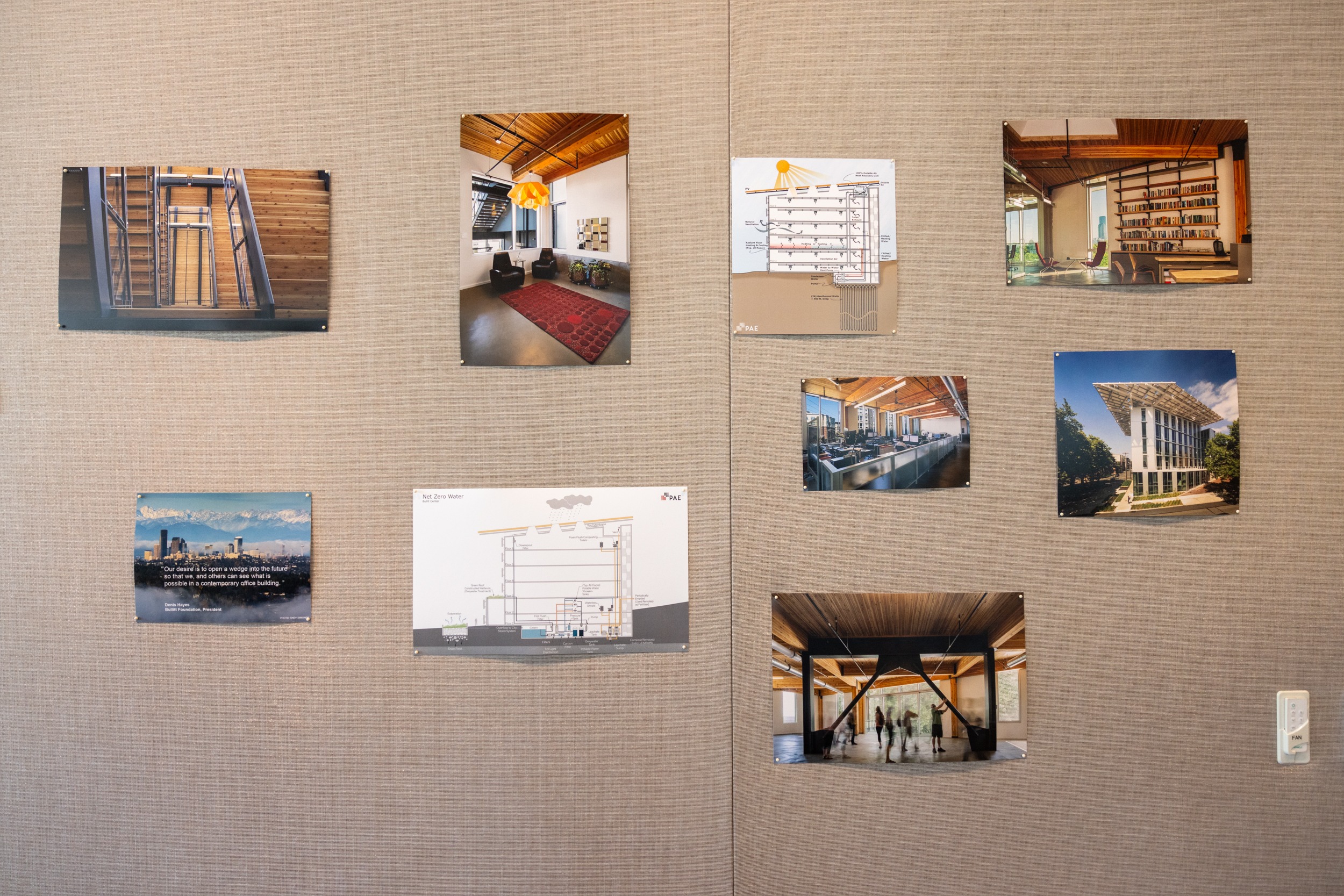
KH: Well, the building that we’re in right now [PAE Living Building] is number one. I did work on it, so it has a personal sweet spot in my heart as well. We’ve used this building as a testing ground for a lot of our ideas. Actually, some of the new tools that we’ve developed and some of the new grid interactivity that we’ve developed has been as a part of ongoing effort on this building because we have access to the systems and we know how it works.
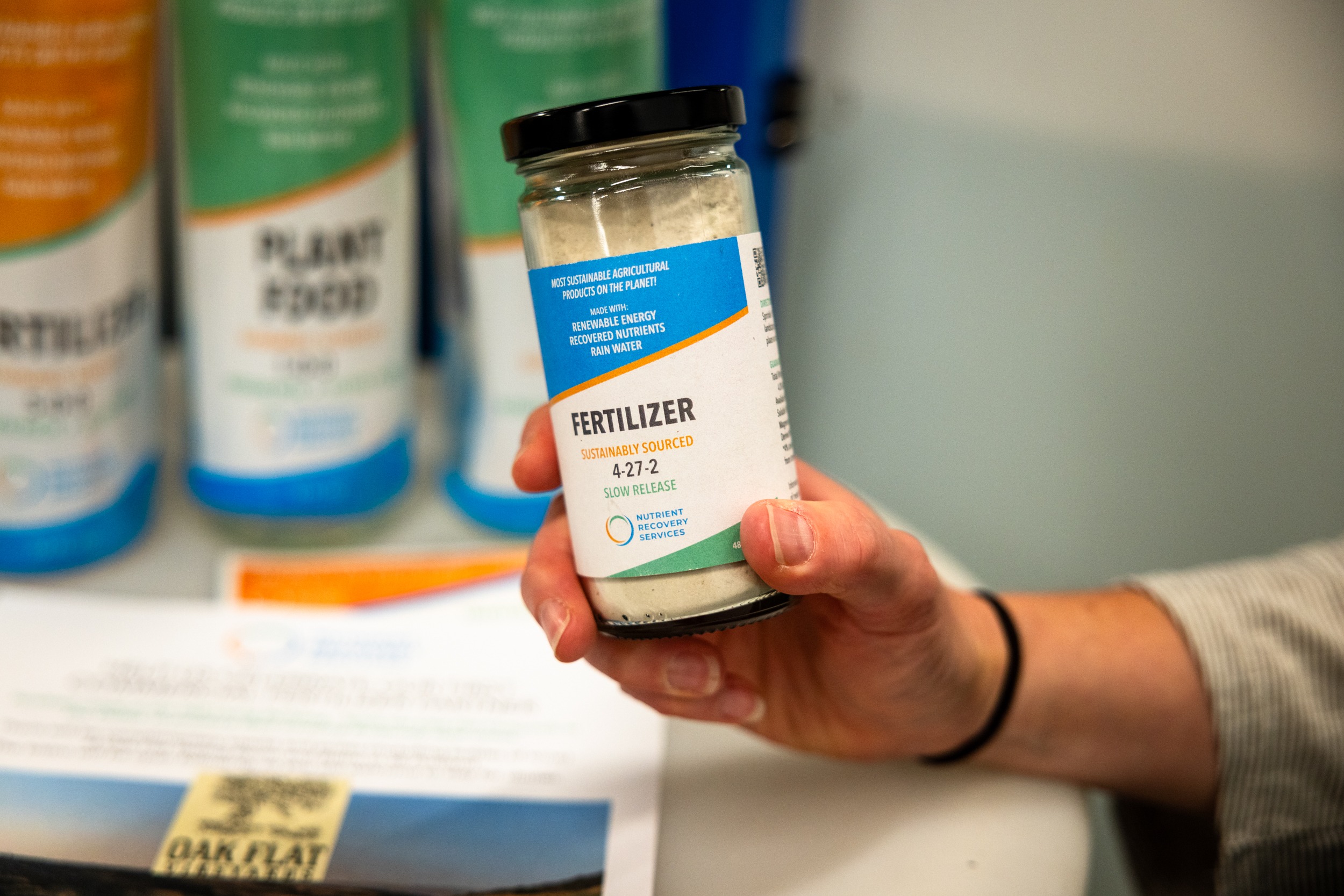
That’s what I love about this project. It was very innovative. It was a bold vision, but it took very pragmatic steps to make it a reality. And now that it’s here, we’re able to continue to interact with it and use it as a learning and experimental device. In many ways, it’s an exploration of circular, closed loop systems. I’ve been talking mostly about the energy system, but the building also addresses water, nutrients, materials, and other resources with this same eye towards thinking differently. For example, all of the toilet waste gets treated then turned into fertilizer through closed loop water and nutrient systems.
Q: As you’ve mentioned a few times, innovation is a driving principle behind your and PAE’s work. How does PAE ensure that new ideas continue to be encouraged and nurtured?
KH: Early in my career, as I was starting to do more and more design work, I was increasingly seeing that the difference between projects that had aspirational goals and projects that achieved those aspirational goals was that the ones that achieved it had taken that early pause to think about it first and actually do the analysis work. In the building world, unlike tech, where you could build 2,500 iterations of the same app or widget, you only get one shot at building a building. You have one budget. So I found myself leaning more and more into the modeled world, and that’s been a really great tool.
Another reason why I’m so thankful that I ended up here is because we have intentionally created a space within how we work that also makes space for innovation. We have an Innovation Group, which provides funding for various internal innovation initiatives, including an internal R&D program. This is so when people have ideas, they have a way to explore them.
And I think that’s culturally been super important for us to be able to stay at the forefront of this industry because, again, if all you’re doing is efficiently churning out the same solution, then you’re specifically incentivized not to try new things. But we’ve built a culture that encourages thinking a little bit differently and created safe spaces for people to explore new ideas without risking the quality on projects. I think for us that has been a really powerful structure in how we’ve been able to do what we do and offer successful, innovative solutions to our clients.
Q: Can you explain what that innovation path looks like? If someone has an idea they want to try, how do they go about testing it?
KH: We have a couple different paths. As I said, we have an R&D program, and once a year, we open that up for teams to submit ideas. We also have an easy form on our internal website for people to submit an idea. It could be everything from some super innovative research project to a small tweak that improves a certain workflow. A couple of the R&D ideas, in particular, have turned into multi-year initiatives that have created new services for PAE, including new career paths for the people who led the research!
Q: Is there anything specifically about Portland that has uniquely contributed to the way in which you’ve built your career?
KH: I do think there is something about Portland — and I would even go further to say Northwest culture at large — that influences some of the innovative, creative, deep thought that comes out of our community here. I don’t know that we necessarily get tons of credit for it because it looks so different from innovation. Everybody associates Silicon Valley with innovation. And there’s lots of hustle, a lot of startups there.
But I guess I want people to not discount the importance of a more quiet and thoughtful path to innovation. I think the Northwest can do that a little bit better. I was thinking this morning, “What are some of the best conversations I have in Portland?” And I realized they’re usually walking meetings on the waterfront. You have the most clarity of thought when you’re away from a screen. And there’s just a little bit more of a cultural acceptance here for that kind of a thing. One of my colleagues does some of his meetings while kayaking. He and one of the clients that he works with, they come up with great ideas when they go kayaking together.
It’s not that we don’t work hard and we don’t hustle. We do. It’s a very hardworking industry here, but I think we are a little bit more able to understand that efficiency isn’t necessarily always the goal. Creativity and innovation and deep thought by its very nature looks inefficient on the surface, but it’s where you get some really powerful ideas.
Photography by Sheepscot Creative