
Company Spotlight: OpConnect
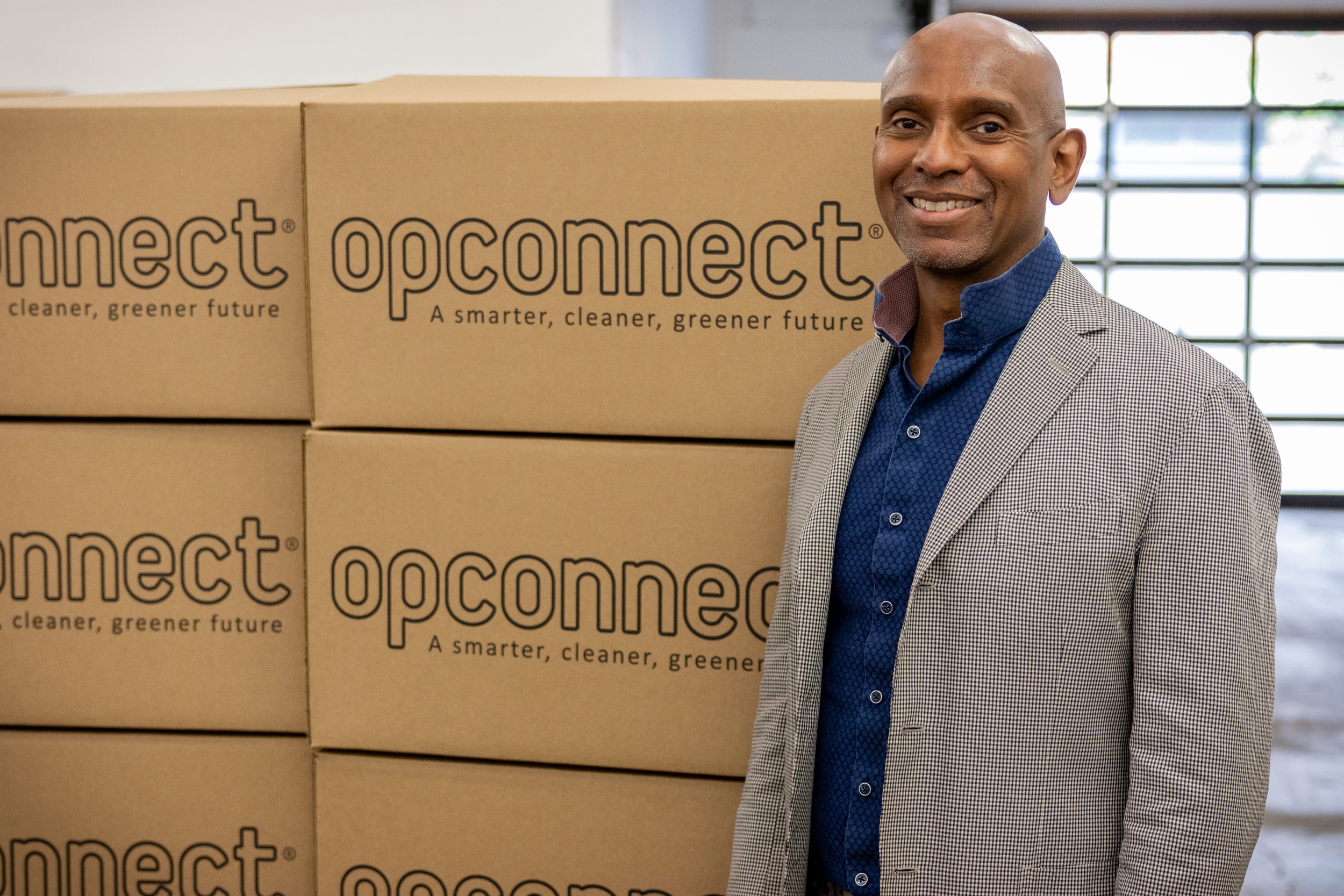
Based in Southeast Portland, OpConnect delivers tools and services to 35 states, Canada and Puerto Rico, to support the adoption of electric vehicles (EVs) and reduce greenhouse gases caused by transportation. We spoke with Dexter Turner, the founder and Chief Executive Officer, and Amy Hillman, OpConnect’s Chief Revenue Officer, about hometown fleets, software solutions, and what it’s been like to build their business in Portland.
Q: Tell us all about OpConnect.
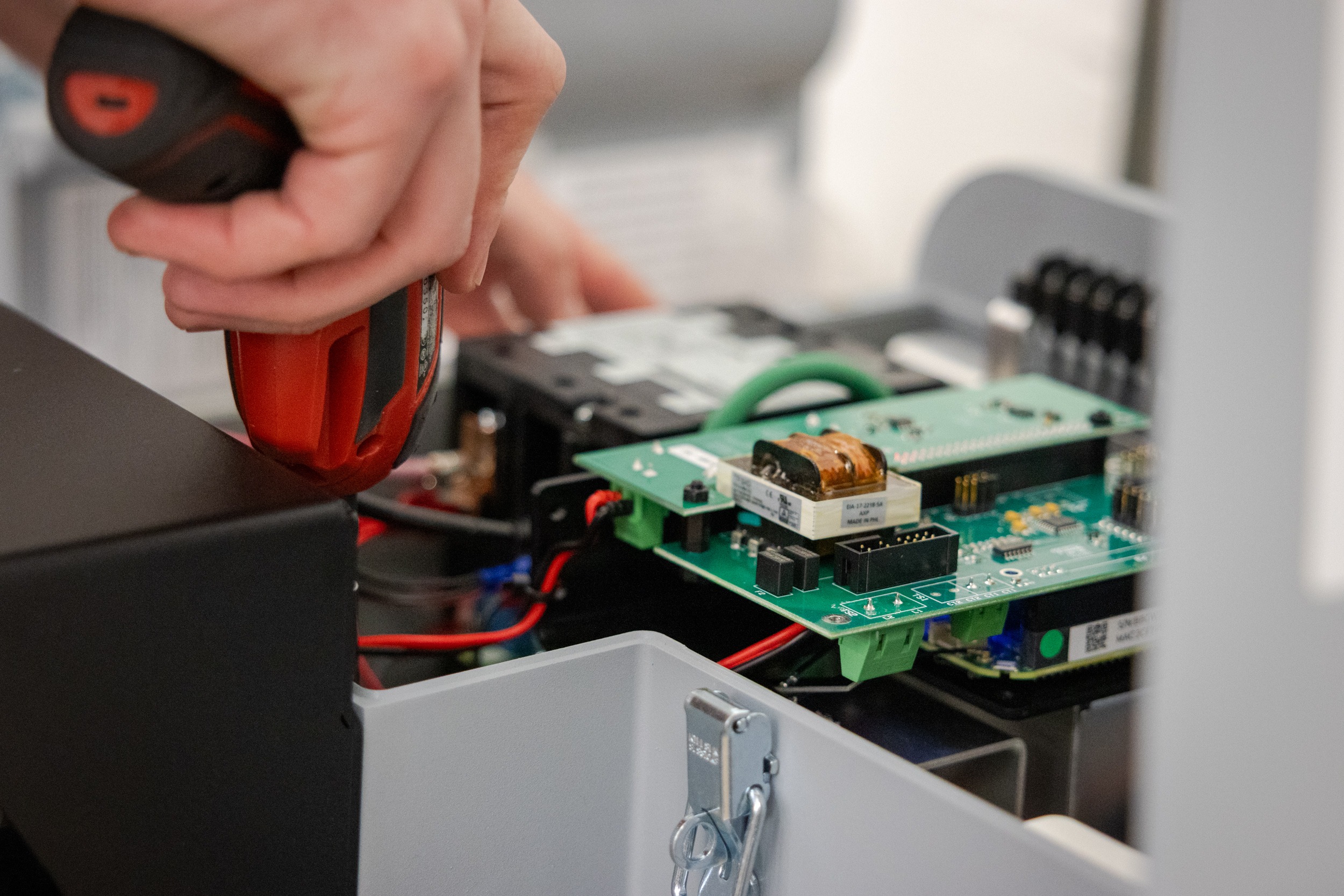
Dexter Turner: OpConnect is a turnkey provider for EV charging stations. We sell the full range of charging stations, from low-power Level 2 up to the highest power, DC fast-charging stations, so we provide charging for everything from cars to transit buses. We manufacture Level 2 charging stations, which can charge an empty Battery Electric Vehicle to 80 percent in 4-10 hours and a Plug-In Hybrid Electric Vehicle in 1-2 hours. For DC fast-charging stations, we resell a number of models made by about half a dozen suppliers.
We provide installation services for the chargers, and once the stations are installed, we operate them and maintain them using our cloud software platform. One major strength of the company is our software platform, which has industry-leading features and functionality.
Amy Hillman: We also maintain the chargers. That’s one of our key differentiators. We have a significantly higher uptime than many of our competitors because we can respond effectively in a timely manner.
Q: How did you get into this business?
Turner: My background is in aerospace. I was a Boeing commercial aviation engineer, then an engineering manager at Honeywell Commercial Aviation Systems. Twenty-one years ago, I started my first company doing contract software for aviation. I also stated a second company where we were trying to bring that big airplane glass cockpit technology from Boeing and Honeywell into a small general aviation cockpit for under $10,000. We had some success and sold that company, and I got to start thinking about what to do next.
I really wanted to do something around climate. Based on my background, I initially looked into electric airplanes, but I knew enough to know that I didn’t have the funds to start an electric airplane company. Then I met some folks here in Portland from the Oregon Electric Vehicle Association. They got me really passionate about EVs. I started looking at where we could play in the industry, and charging was what came out of it. That’s really where the company came from.
We’re based in Portland, but we’re now in 35 states, plus Canada and Puerto Rico, and we’re looking to expand into Europe.
Hillman: I’m a long-term greenie—that’s what we used to call being an environmentalist: a “greenie.” I worked at Greenpeace in D.C. from ’90 to ’95. When I moved to Portland after graduating from college in ’96, everyone was a greenie but there were no green jobs. Years later, when I started a Sustainable MBA program, I realized that I wanted to focus where sustainability meets sales, because I found that people who care deeply about sustainability weren’t embracing sales and marketing, and I loved both.
Q: Tell us a bit about your customers. Who do you serve?
Turner: We’re a B2B company. We provide charging stations for multifamily housing units—so, apartments and condominiums—and also for fleets and workplaces. The City of Portland has over 2,000 pieces of equipment in the city fleet. PGE has thousands of vehicles in their fleet. Some of our bigger customers such as Southern California Edison have over 4,000 vehicles in their fleet, and they’re looking to convert vehicles to electric. They hire us to supply, install, and operate the EV charging.
We do public charging, but we look for strategic opportunities—for example, if we’re doing the city fleet and they also want to provide public access. We want to have that relationship first with the city.
Q: You mentioned industry-leading technology. What does that look like in terms of EV charging?
Hillman: The software needs of our fleet customers can be quite sophisticated. For instance, they might not have enough energy at the spot to cover their needs. We have software to move energy around. We can allow them to oversubscribe.
Another thing might be that companies want to let employees charge their cars when fleet vehicles are out for the day, and they need a way to differentiate and collect fees. PGE is a good example of that. At World Trade Center, fleet vehicles need to be able to charge for free, employees receive a discount, and then there’s the general public rate.
Turner: And some fleets have specific use cases. Let’s say there are some priority vehicles in a fleet that are really important. When those plug in, they need to pop to the top of the list. They get charged as quickly as possible because they need to get turned around and back out on the road.
Q: What excites you about the industry right now?
Turner: If you don’t know anything about EVs, you might turn on the TV and see that the rate of EV adoption is going down or that government funding is being yanked. You might think that this is a terrible industry. I believe that the technology and the facts are going to win out in the end.
Ninety percent of individuals who switch from a gas vehicle to an EV say that their next vehicle is also going to be an EV. They’re converted. Of the 10% that say they won’t, the number one reason they cite is a lack of charging infrastructure. We solve that problem, and now everybody is converted permanently.
And we’re converting more people all the time. People who have EVs can’t stop talking about how awesome they are—they’re fun to drive, they’re quieter, more comfortable, there’s less vibration. Then, oh, by the way, they cost less money to operate than a gas vehicle. And for fleet operators, it’s the same proposition. That’s what I mean about the technology and facts winning out in the end.
Q: What’s a challenge in the industry that might not be obvious from the outside?
Turner: I’m old enough to remember when there was no self-service gasoline. You’d pull into the gas station and the attendant would come out and wash your windows. They’d pop the hood and check the oil and all that. Those attendants modeled to many of us how to do basic maintenance on our cars. But eventually, self-service gas stations were introduced. It took time for drivers to transition from full service to self-service gas.
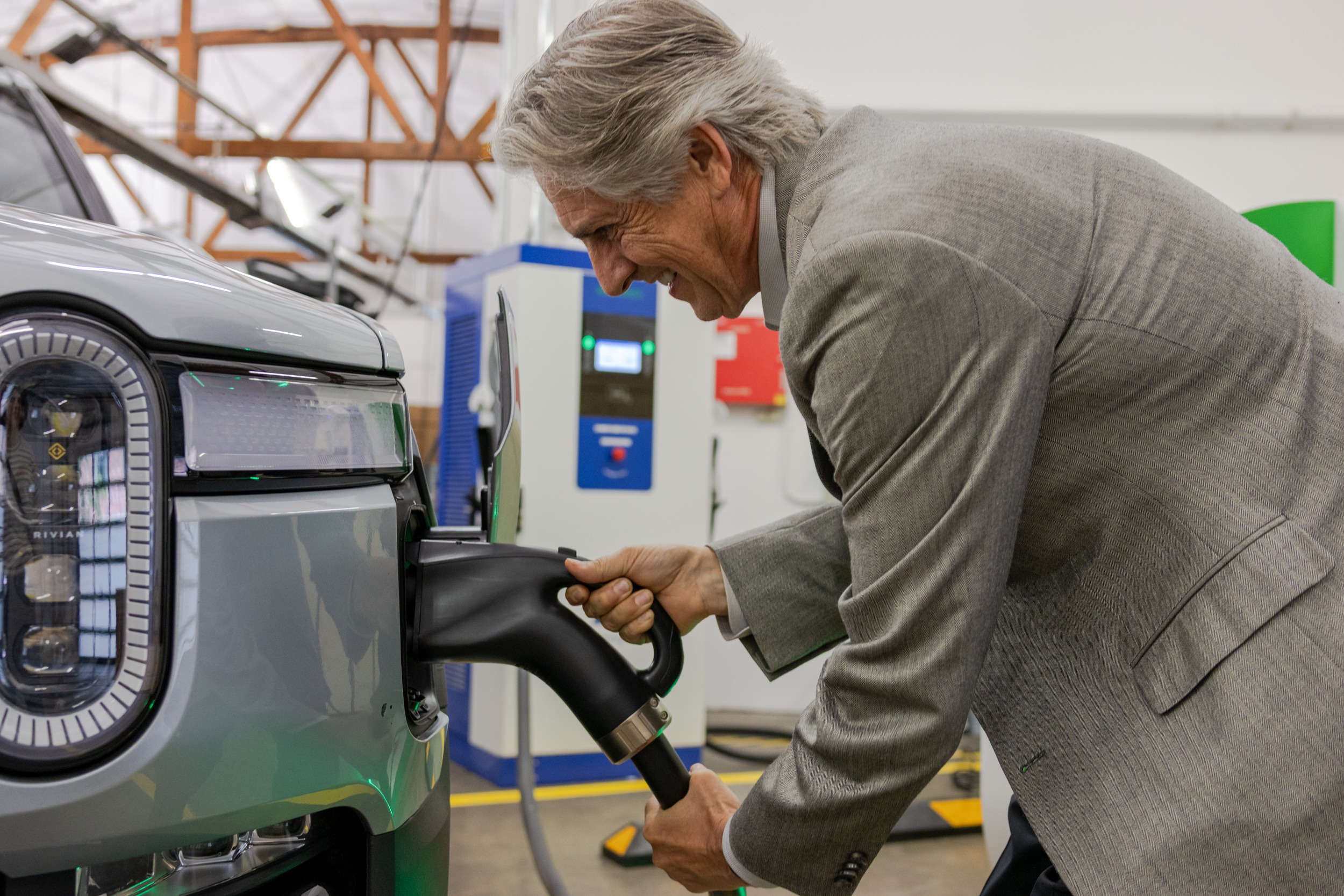
Then we came out with EVs and put all these charging stations out there—totally unattended. We skipped the part with somebody there helping you and went straight to unattended, self-service charging stations. This is a new technology and the industry is still figuring out how to make charging stations intuitive so that people know how they work.
Q: How has being in Portland shaped your business?
Turner: Portland is an excellent place to operate a clean tech business. There’s a great ecosystem here. VertuLab specifically supports clean tech companies. We’ve got investors like Portland Seed Fund that want to invest in clean tech companies. We’ve received support from Prosper Portland. There are design firms here, there’s a ton of engineers and software engineers. Our sheet metal work is done here. Everything we need to have a really strong clean tech company is here.
Hillman: And the hometown fleets have been supportive. We’ve won at bid, fair and square, but we’re local, we’re close, and we can service. So we have PGE’s fleet as customers; we have the City of Portland’s fleet; we have Multnomah County’s fleet. That didn’t happen overnight—there’s a lot of trust built and a lot of collaboration—but Portland is a leading place.
I started in this industry 14 years ago. I put in those charging stations at all the Fred Meyers. They were my customer in the beginning days. Portland is a leader for sure in embracing new ideas and launching pilots.
Q: What role does an agency like Prosper Portland play in the development of a business like yours? What should other business owners know?
Turner: First, just in general, they support the ecosystem, hosting or sponsoring events where we can get together with other clean tech companies. You can share ideas, you can meet people, you can collaborate on future projects. Then, obviously, the grants, and sponsoring pilots or sponsoring us to go to a trade show. When you’re a small startup and you’re pinching the pennies, you don’t have $20,000 to spend to go to a trade show, but that $20,000 trade show may end up leading to $100,000 in business the next year. Having somebody to be able to spot you for that is huge.
I’m now advising some entrepreneurs that I’ve met at Prosper Portland events. I want to put myself out there as a local entrepreneur that has something to offer. I don’t want anything in return, I’m not going to try and take 10% of your company, but I’m glad to have lunch with you once a month or whatever and give you some free advice.
Q: What else should people know about OpConnect?
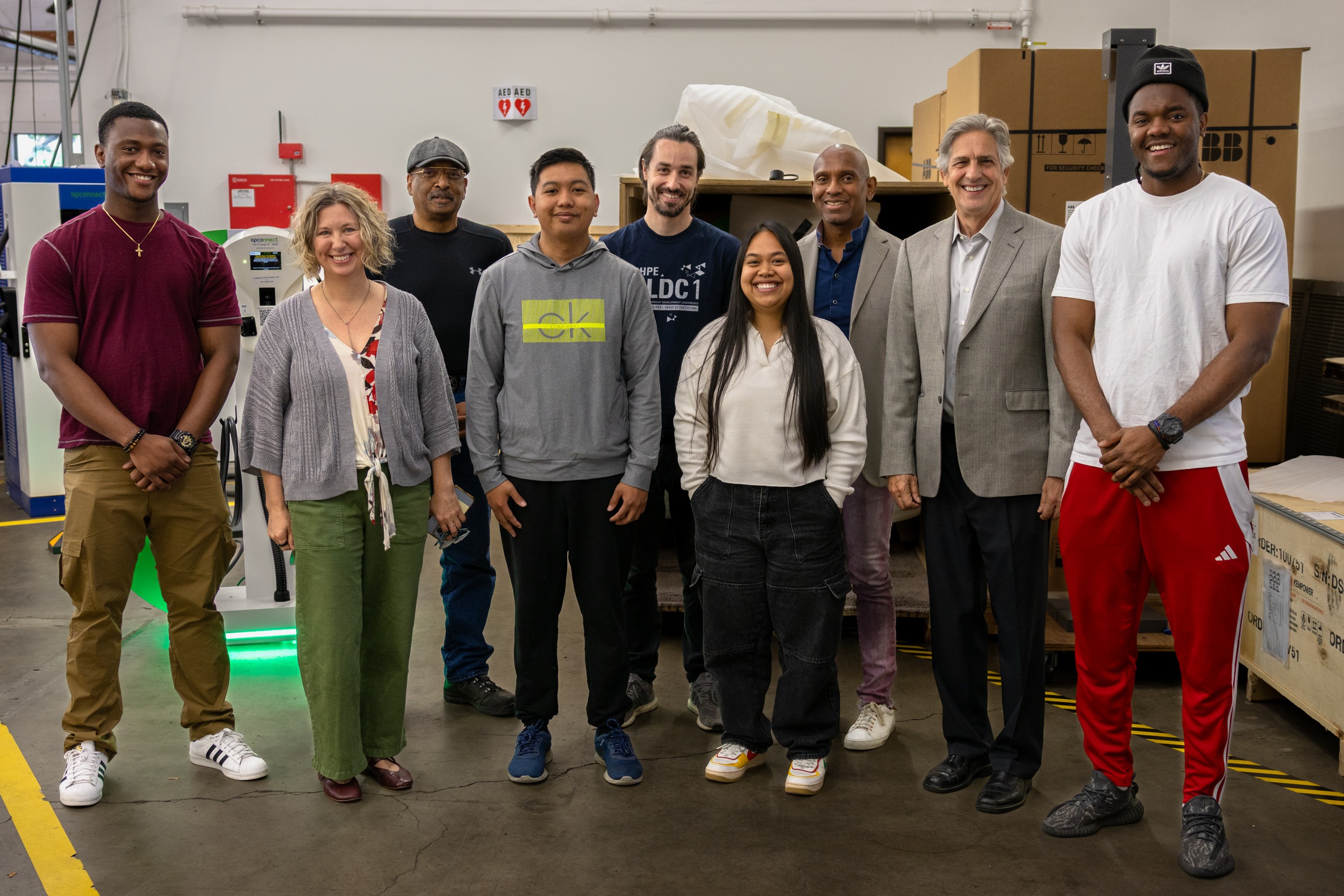
Turner: We’re proud to have built a really diverse team.
There’s a picture hanging on the wall in my office of the Boeing Triple Seven aerodynamics engineering team. You can easily spot me in that picture because I’m the only Black person there. That’s the experience that I usually had early in my career. One thing I decided was that if I ever built a company, I wanted my team to look different.
That’s not always easy to do. We’ve had to be intentional about making this one of the company’s core values. Diversity means more to me than just having people of different races and religions. I didn’t want to build a technology company that was all young people either, so we’ve got the full spectrum of age, as well.
Hillman: It’s been inspiring. People of color that I interview and who ultimately end up working here are like, “God, this is so refreshing, the culture.” And I say, “Well, it’s because Dexter’s at the top.”
Photography by Sheepscot Creative