
Company Spotlight: Rocsys
Here’s a question: What do you do when an autonomous electric vehicle needs to be charged? Who’s responsible when there’s no driver? How does that work? How should it work?
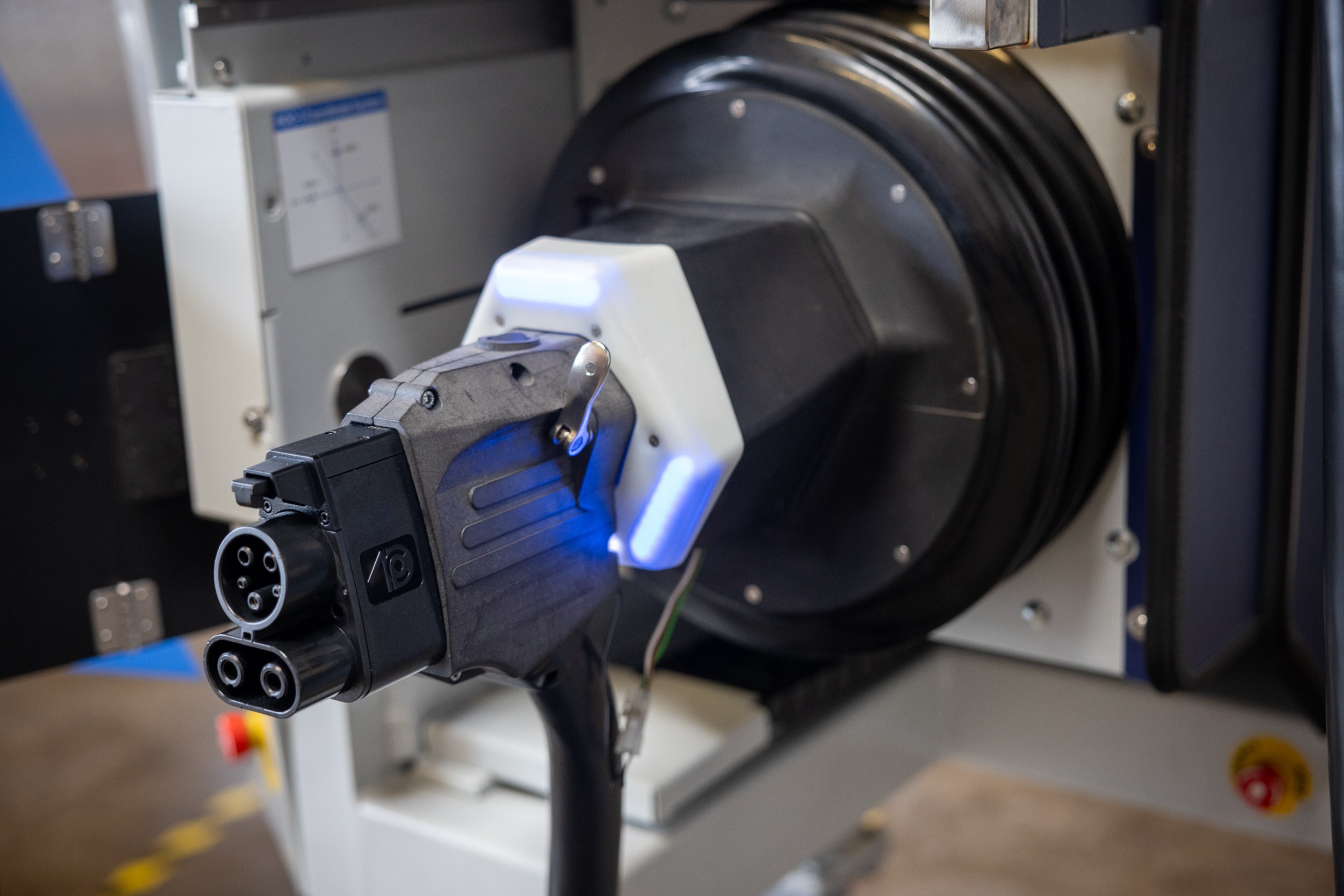
Rocsys is pioneering EV charging automation. With headquarters in the Netherlands and North American operations based in Portland, the company delivers a hands-free and effortless automated charging experience for markets including logistics, robotaxis, and ports worldwide.
We spoke with Erin Galiger and Mark Henderson about the emerging need that Rocsys addresses and where they see the company heading as autonomous EVs become more common.
Q: As an introduction, how do you typically explain what Rocsys does?
Erin Galiger, Director of North American Markets: We automate the operations in charging depots.
Bring your own charger—we have a robotic platform that can automate that plugin.
We work with many different markets—ports and logistics, as well as robotaxi—basically taking the manual labor out of plugging in and plugging out. At scale, it has a really big impact on the cost and throughput of getting those vehicles back out on the road.
Q: Why did you decide on Portland when you opened a North American office?
Galiger: We chose Portland partially because of the ecosystem that exists here. The EV charging community in Portland isn’t as big as some other places, but it’s really rich. People know each other. Both Mark and I came from the EV charging space here in Portland.
Atlanta, Austin, San Diego, and Los Angeles were some of the other places under consideration.
Mark Henderson, Chief Commercial Officer: I think that spiritually and culturally, there’s a lot of connection to the Netherlands, where our HQ sits. A similar vibe. There’s a very rich sustainability culture here that fits well with our mission.
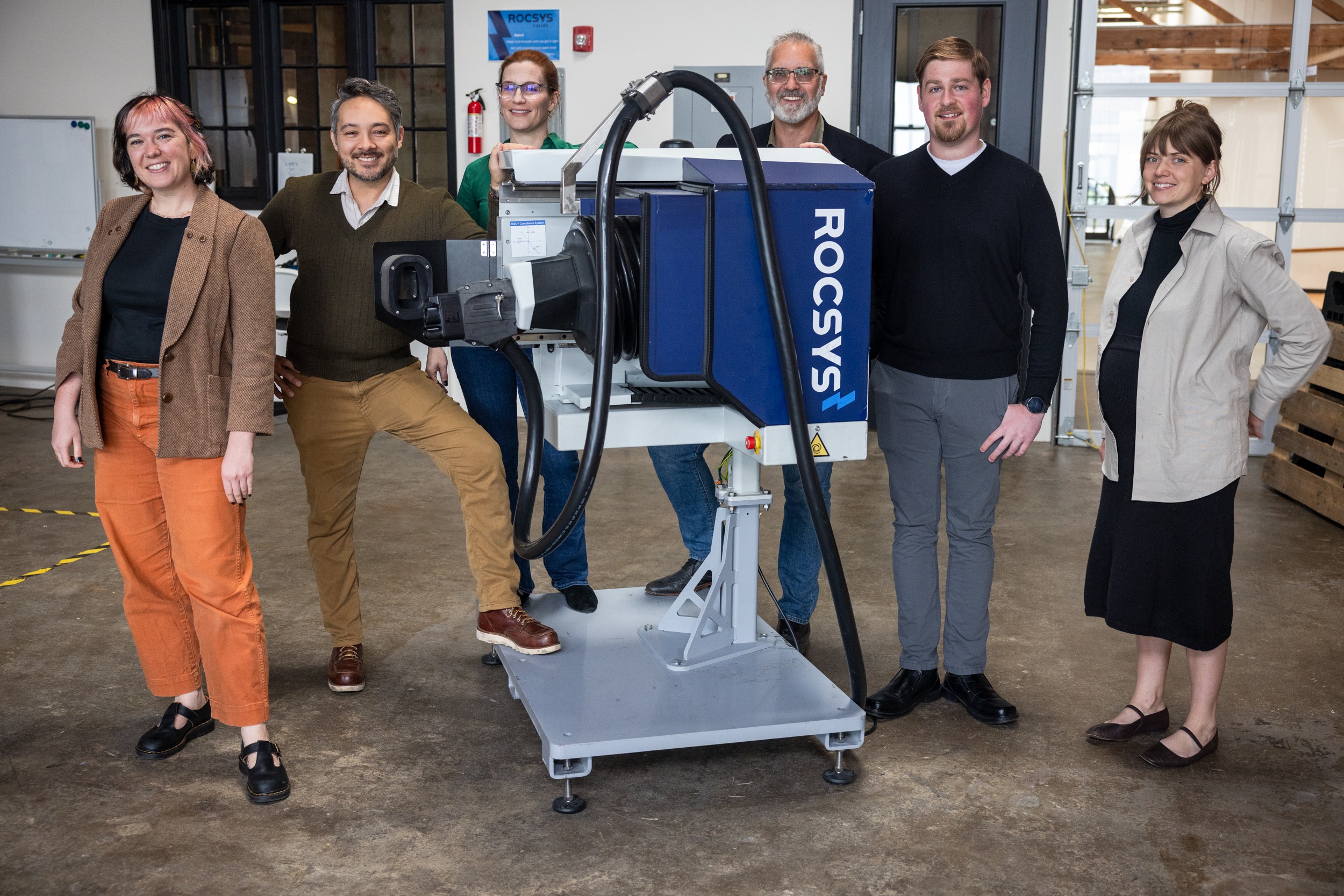
Q: Tell us about your team and your Portland office.
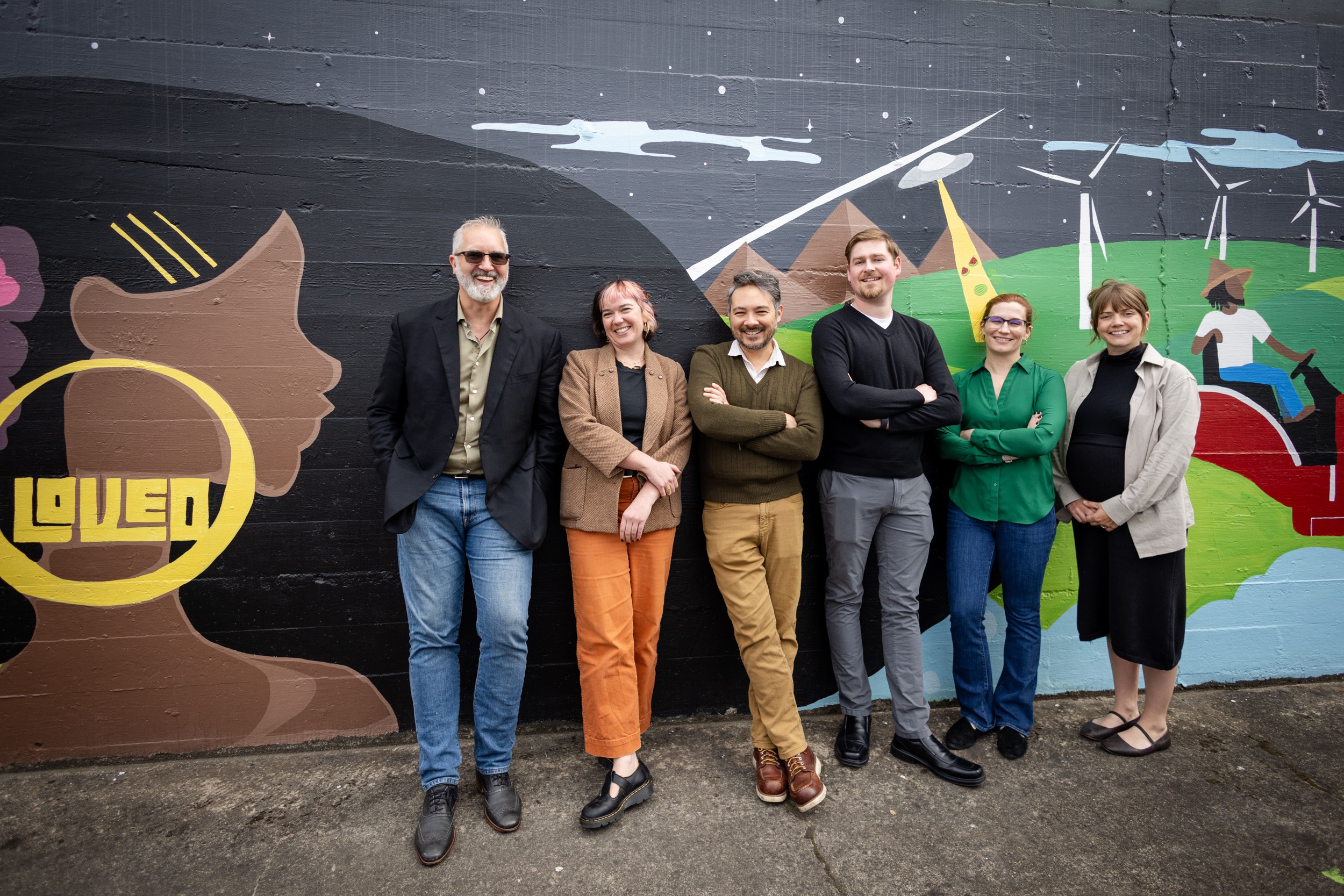
Galiger: We have six people here, and ten total across the U.S.
There are two physical spaces here: one for our lab, testing, assembly and storage; and the other for the office and administration side of things. We have program management here and also application engineers to work on the physical product.
Q: How do people react when they hear that your U.S. office is in Portland?
Henderson: It’s very positive. Portland has a reputation as a forward-thinking culture. It can lead to some really positive interactions, which can lead to business. And almost everyone I speak to mentions the natural beauty of the Northwest. That’s a good thing.
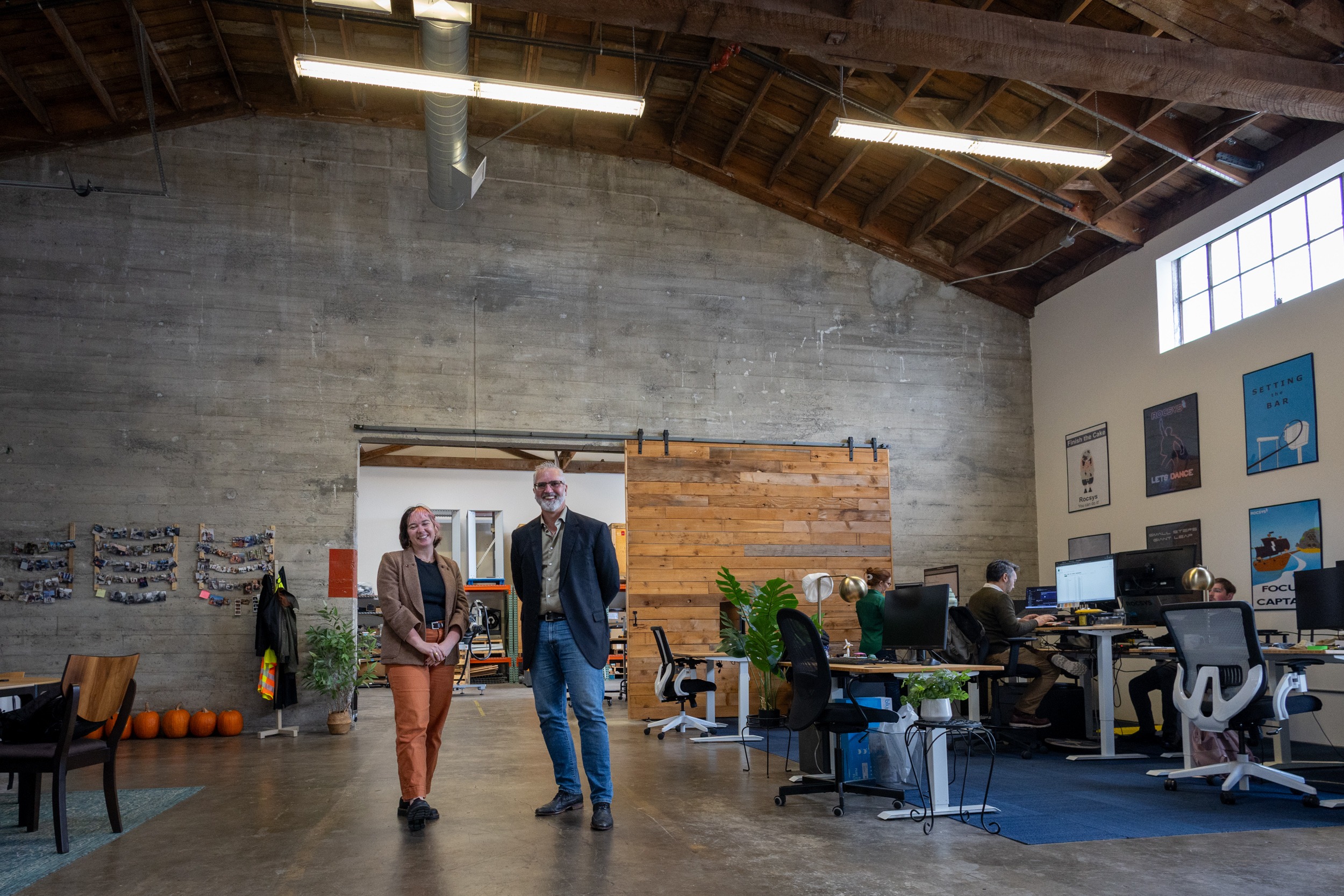
Q: You mentioned that the Portland ecosystem was beneficial to your business. Can you expand on that?
Galiger: For one thing, we try to procure locally as much as possible. We use a local packaging company that I found when I biked past their location and thought, “Oh, we could use them.” There are a lot of stories of finding things like signage and print shops just because they’re nearby. Our metal fabricator sits in Portland, which is valuable because we can easily inspect items prior to shipment.
The other side of the Portland ecosystem is all the different affiliations that have a presence here. There’s the EV side of things, where Mark and I used to work. And there’s a small but bustling roboticist ecosystem here—they even have a meetup, which is a really fun way to get in touch with other people who are working in robotics. Working in Portland has given us the opportunity to establish lasting contacts in a number of related industries, and we’re thankful to be in a city where we have that luxury. Plus, there’s no shortage of talented people to choose from when we’ve needed to expand our team.
In the past, we’ve hosted some industry events within our space in conjunction with the Formula E when the race was in town. We’d be excited to use our office as a space for people in the industry to connect; whether it be EV, AV, Robotics, or otherwise.
Henderson: Any opportunity we have to facilitate that local connection is helpful. That’s the benefit of Portland. It’s small, but everyone knows somebody. It facilitates collaboration.
Jaguar Land Rover Daimler, and Hyster Yale are here, too.
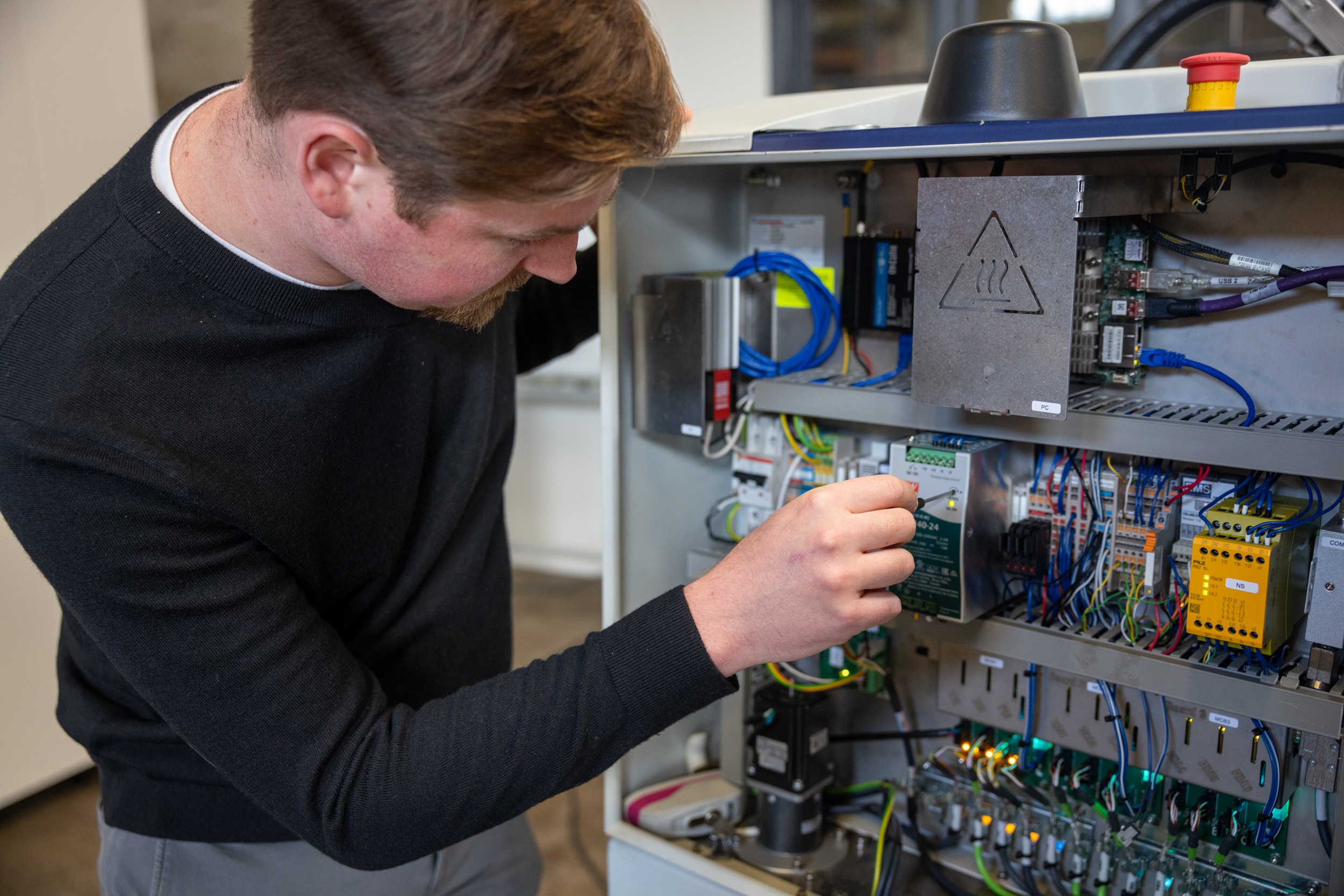
Q: What sets Rocsys apart in this landscape? What do you offer that others don’t?
Galiger: We’re trying to provide a type of value that didn’t historically exist: bring your own charger, bring the same vehicle that you have, and we’re able to create automation in the depot where everything can then be throughput in the efficiency gained.
That wouldn’t be possible without our solution. If you were to use a different type of technology, the cost of actually implementing it from the vehicle side, or even from the infrastructure side, is very costly compared to ours.
Henderson: A lot of that cost depends on how frequently the vehicles are being charged, how long the charging cycle is, and what time of day they’re being charged. There are a whole lot of factors, but we can be extraordinarily efficient with the business case in most environments.
Q: You mentioned Daimler. As an example, what are you able to offer a company like Daimler?
Galiger: Daimler was one of our first public demonstrations in the U.S.
They’re building trucks that are charging at really high power levels. They’re looking for a system that is safe, so people don’t have to be very close to this power delivery level and don’t have to handle these super heavy cables. And it has to be reliable. We’re delivering on all those requirements.
If a truck is pulling into a charging hub, the charging can be hands-free and automated. It’s delivered fast. It’s delivered safely. And as soon as that charging session’s over, we can free up the space for the next truck to come in.
Henderson: It’s a sales enabler for companies to make the transition from internal combustion toward electric. And as more of these manufacturers explore vehicles with fully autonomous functionality, there will be an even greater demand for our solutions in the future.
Q: How have recent changes in tariffs and federal regulations impacted your work?
Henderson: I’ve been in sustainability in Portland for a long time. I worked in energy first, worked with utilities to help companies and individuals lower their energy bills, worked in electric vehicles… I’ve seen a lot of ups and downs in that time. One of the things I’m heartened by is that through all of the fluctuations, good technologies win out.
I don’t want to understate, though, that ports especially do rely on a lot of different federal grants, and the current regulations have changed their landscape.
Galiger: On the positive side, there’s federal support and momentum for deployment of autonomous vehicles. We’re seeing progress towards overarching federal policy. We’re going to continue to see growth there.
Q: What is it about ports, especially, that makes this technology so valuable?
Henderson: In some ports, you have autonomous trucks. If you don’t have a driver of a vehicle, then you don’t have somebody to plug the vehicle in.
Today, most of the time you encounter that scenario outside the United States. In the U.S., where there’s a commitment to union labor, oftentimes union contracts stipulate who can actually plug in a vehicle, when that charging can be done, and how long it can take. Something has to happen to make those charging sessions happen quickly, so that the vehicle can be ready at the end of the driver’s lunch hour.
Q: Do you work exclusively with fleets, or does this apply to individual ownership as well?
Henderson: There is a future where you might park an autonomous vehicle in your garage and it automatically gets connected for charging. We could and would provide that kind of charger when there’s a market for it. But this is going to start in the fleet environment, where there is scale and a business case for companies to be moving first toward electric and ultimately automation with their vehicles.
If somebody’s skeptical or fearful of automation, first of all, automated vehicles are safer than human-driven vehicles. But it’s also interesting to think about what the societal benefits are going to be of this transition. Being an integral part of that shift is a really exciting prospect for us.
Photography by Sheepscot Creative